In brief
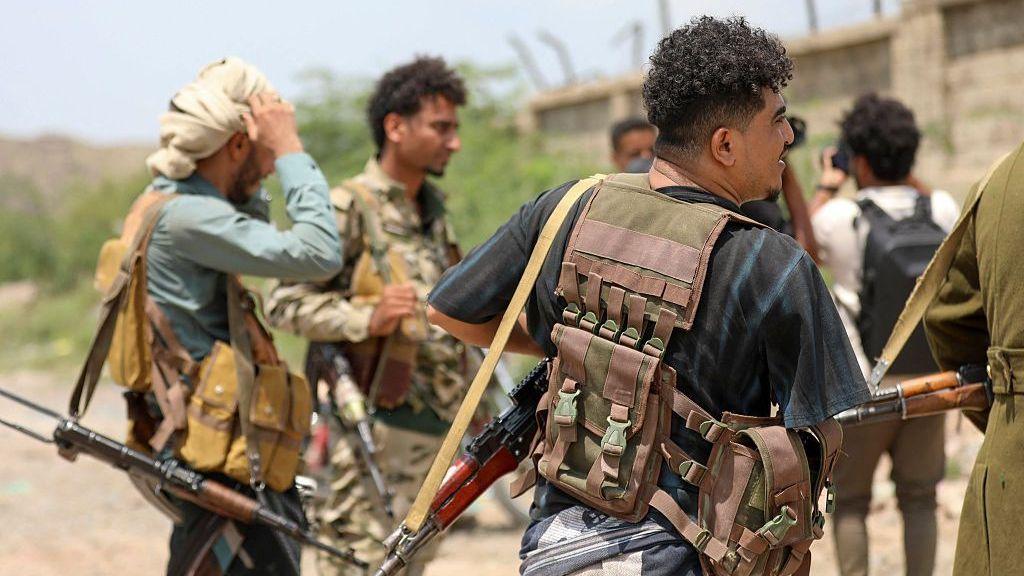
Yemeni forces, supported by Saudi Arabia, announced the seizure of the Bab al‑Mandab Strait, a vital maritime chokepoint, as they launch an offensive to reclaim territory held by the Houthi movement. Military spokespersons reported that Giants Brigades and National Shield units had taken the airport at Dhubab and cut the road to Mokha, though Houthi media denied any loss. The offensive now includes fronts across Yemen, from Sanaa back to the south‑west coast, with Saudi coalition jets reportedly hitting over 300 high‑value targets. While the Houthis cited a maritime embargo against Saudi ports as a trigger, the conflict has driven thousands into displacement and intensified missile attacks on Saudi infrastructure. Both sides claim air superiority and accuse each other of escalating the war, as the world watches the strategic strait that connects the Red Sea to the Gulf of Aden.
Yemeni pro‑government forces, backed by Saudi Arabia, claim they have secured the Bab al‑Mandab Strait, marking the start of a sweeping offensive aimed at driving the Iran‑backed Houthi rebels out of key territories. The announcement comes amid growing tensions as the coastal strip’s strategic waterway links the Red Sea with the Gulf of Aden.
According to a spokesperson, Giants Brigades and National Shield units had taken control of the airport in Dhubab, a town overlooking the strait, and cut the road to the historic port of Mokha. Houthi‑run media denied the government’s gains, but the coalition’s status report confirmed the aircraft‑battles that transpired. On the same day, the Saudi‑led coalition said its fighter jets destroyed more than 300 high‑value targets in support of the ground push.
The head of Yemen’s Presidential Leadership Council, Rashad al‑Alimi, launched the offensive by urging all armed forces to carry out assigned missions “until the country is liberated from the grip of the Houthi terrorist militia.” The statement reflected that the planners viewed the operation as the final effort before the regime reached the horizon of resolution.
Earlier this year, Houthi fighters had cut a mountain road near Taiz, effectively isolating the city and its residents. In response, the rebels launched ballistic missiles and drones aimed at Saudi Aramco facilities in Riyadh and the Khurais area, citing retaliation to Saudi strikes on Houthi territory.
The conflict that began in 2014, when the Houthis ousted the Yemeni government from Sanaa, has evolved into a broader civil war. In 2015, a Saudi‑led coalition intervened to support the internationally recognised government, creating a protracted war that continues to spill across the region.
Last month’s surprise offensive along Yemen’s southwestern coast saw the Houthis oust government forces from several positions that oversaw the strait, yet they declared that they pose no threat to international shipping—though they vowed to target vessels from Saudi Arabia. At present, at least 959 civilians have been killed and 5,000 wounded in Yemen since 6 August, while the UN reports that 197,000 people have been displaced as a result of the fighting.