
In brief
The ongoing struggle faced by Palestinian farmers highlights the critical intersection of heritage, economy, and escalating violence in the West Bank, as incidents of aggression against olive harvesters become alarmingly common.
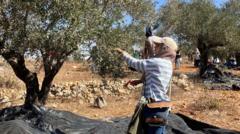
---On an afternoon in late September, Hanan Abu Salameh, a 59-year-old mother of seven, ventured into her family’s olive grove near Faqqua, a village in the occupied West Bank. Tragically, within minutes of her arrival, Hanan lay mortally wounded, having been shot by an Israeli soldier. Despite coordinating their plans with the Israel Defense Forces (IDF), the soldier opened fire as her family fled to safety. Her husband, Hossam, and their son, Fares, feel a deep sense of despair, convinced that justice for Hanan’s death will never materialize.This incident isn't an isolated tragedy. The volatile situation for Palestinian olive farmers has been exacerbated by organized campaigns led by Israeli settlers, often supported by Israeli security forces, to disrupt their crucial harvests. The olive harvest, both a cultural staple and economic lifeline, is deeply rooted in Palestinian identity, yet this year farmers report massive losses due to violence and restrictions.Omar Tanatara, a farmer from Umm Safa, shares harrowing experiences from previous harvests: “Last year, we barely managed to pick any olives. The soldiers not only disregarded our efforts but even destroyed the olives we had gathered,” he recounts. Reports of olive trees being felled and threats issued to farmers paint a bleak picture of this reality, as many farmers now resort to using makeshift rakes just to salvage any remaining produce.The olive trees, regarded as the backbone of the Palestinian agricultural economy, are under siege. The UN reports an alarming statistic: over 96,000 dunums of olive groves failed to be cultivated this year, entirely a result of restrictions imposed by Israeli authorities. The delicate harvest contributes over $70 million to the Palestinian economy in prosperous years, yet this year promises significant losses as access to the land becomes increasingly perilous.Amid these upheavals, activists from both Palestinian and Israeli backgrounds have attempted to mitigate violence during the harvesting season. Zuraya Hadad, an Israeli peace activist, recalls a distressing moment when she was assaulted while assisting Palestinian farmers. “Help doesn’t guarantee safety,” she stresses, revealing the systemic fear that permeates this annual event.At the heart of this struggle lies the broader Israeli-Palestinian conflict—a conflict steeped in territorial disputes. For many Palestinian families, their ties to the land and agriculture are essential to their identity and survival. However, as extreme settler violence intensifies, these ties are increasingly strained.Factory owner Abd al-Rahman Khalifa emphasizes the dire consequences of the violence: “This year will be even worse than before. Farmers, including my relatives, face brutal encounters when picking olives,” he laments, underlining the agricultural dependence of the Palestinian economy on this critical crop.The looming presence of extremist settler outposts adds another layer of tension to the already fraught atmosphere. Settler leader Zvi Bar Yosef, sanctioned by numerous governments for violent acts against Palestinians, embodies the threats facing those attempting to tend to their ancestral lands.As Israeli far-right leaders continue to embolden settlers, Palestinian farmers find themselves trapped between cultural heritage and survival, aiming to press on with a tradition that symbolizes their longstanding connection to the land. The resilience of the Palestinian people is evident as they gather in anticipation to witness the pressing of their remaining olives into what they call "liquid gold," yet the uncertainty of their future looms ever larger.

