
In brief
His legacy as a critic of apartheid and advocate for human rights will resonate for generations.
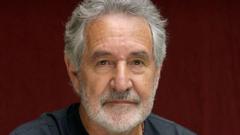
Breyten Breytenbach, the celebrated South African writer and anti-apartheid activist, has died at the age of 85, as confirmed by his family. He passed away peacefully in his sleep in Paris, with his wife, Yolande, by his side. Renowned for his incisive critique of the apartheid regime, Breytenbach remained a tireless advocate for justice throughout his life. His family described him as "an immense artist" who "fought for a better world until the end."Breytenbach garnered significant admiration for his intellect and activism, even earning a humorous tribute from the British television show Spitting Image, which labeled him "the only nice South African" amidst the apartheid turmoil. Former French education minister Jack Lang paid homage on social media, calling him "a rebel with a tender heart" involved in all human rights struggles.Born on September 16, 1939, in the Western Cape, Breytenbach was raised in a family of five. He studied at the University of Cape Town and was part of the Sestigers, a group of Afrikaans writers aiming to highlight the beauty of their language while critiquing the racist apartheid regime actively. He famously stated that, while he accepted Afrikaans as a language, he rejected its association with the oppressive Afrikaner political identity.In 1960, Breytenbach left South Africa and spent much of his life in self-imposed exile, primarily in Europe. He remained vocal against apartheid, working in various capacities, including a stint in London, before finally settling in France, where he met his wife, Yolande Ngo Thi Hoang Lien. Their desire to return to South Africa in the 1960s was thwarted because of apartheid laws that deemed their interracial marriage illegal, reflected in the denial of a visa for his wife.In 1975, during a secret return to South Africa, Breytenbach was arrested while trying to support opposition groups. He was sentenced to seven years in prison, during which he continued to write, eventually producing his seminal book, "The True Confessions of an Albino Terrorist," a stark reflection on his incarceration. His release in 1982 was influenced by then-French President François Mitterrand, and he later became a French citizen.Despite the end of apartheid, Breytenbach remained a vocal critic of the African National Congress (ANC), expressing concerns about corruption within the liberation movement. His activism extended globally; in a 2002 open letter to then-Israeli Prime Minister Ariel Sharon published in The Guardian, he condemned injustices perpetrated against the Palestinian people.Throughout his prolific career, Breytenbach published over 50 works, including poetry, novels, and artwork, which often addressed themes of captivity and liberation. His contributions to literature and human rights earned him France's esteemed title, Knight of the Order of Arts and Letters. Breytenbach leaves behind a legacy that will continue to inspire activists and writers alike, survived by his wife Yolande, daughter Daphnée, and two grandsons.

