
In brief
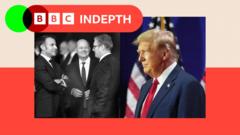
With Trump's return to the White House, Europe faces significant challenges and potential disruptions in trade and defense. Leaders across the continent are contemplating their next moves, balancing between managing their internal issues and responding to Trump's combative persona, while questions about their collective readiness loom large.
As the political landscape in Europe braces itself for the impact of Donald Trump’s re-election, various leaders and citizens are expressing their concerns over the potential implications of his return to the White House. Amidst persistent economic stagnation and domestic uncertainties, voices like Iris Mühler, an engineering teacher in Germany, highlight the perplexity of media’s concentration on Trump while European nations grapple with their challenges.In the wake of Trump’s electoral victory, European leaders are reevaluating their strategies in light of his transactional approach to foreign policy, especially in trade and military alliances. Trump’s historic view of the world as a competition, where nations exist in a balance of winners and losers, leaves European leaders wary of losing any semblance of collaborative ties built since World War II. In particular, expressions of frustration from former German Chancellor Angela Merkel emphasize a belief that Trump perceives Europe as having exploited the U.S. for years, which he asserts must end.The specter of a possible withdrawal from NATO hangs over the continent, especially as Trump signals a greater insistence on increased defense spending by European allies. This comes at a time when key European nations like France and Germany are themselves mired in political and economic troubles, revealing a palpable fragility.Trump's aggressive stance toward European trade policies is particularly alarming, with plans for substantial tariffs posing a direct threat to economies dependent on exports, like Germany’s. As EU leaders prepare for a potential trade confrontation, Ian Bond from the Centre for European Reform highlights Germany’s place at the center of Trump's crosshairs, raising fears of far-reaching economic repercussions.Moreover, as Trump's previous terms pushed the EU to strategize its defense and trade policies, analysts note that the current environment may be more fractured and uncertain. Populist political movements resurge across multiple nations, complicating a unified response as leaders pivot between fending off the harsh realities of an increasingly influential from the U.S. and uniting against external threats from Russia and China.In facing Trump 2.0, European leaders adopt diverse tactics to manage relationships. French President Emmanuel Macron has been known to uniquely charm Trump, while others in the EU seek to adopt financial negotiation strategies to soften the blow of potential tariffs. Meanwhile, conspicuous transactions on energy and agricultural products highlight Europe’s struggle for strategic autonomy in a time of volatility.As Europe remains caught in the throes of uncertainty and skepticism regarding Trump, critical questions loom about how resilient and cohesive the continent can remain in the face of new challenges stemming from the U.S. As leaders gather to devise united strategies, the outcome and direction of the transatlantic relationship remain to unfold, marking the beginning of a crucial chapter in global diplomacy.
