
In brief
More than 442,000 children have received polio vaccinations in Gaza, but thousands remain unreachable due to intense conflict. The WHO warns that serious access constraints jeopardize the success of the immunization campaign designed to halt transmission of the virus.
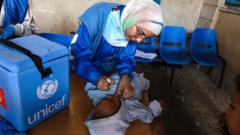
The World Health Organization (WHO) has announced the resumption of polio vaccinations in north Gaza, following a humanitarian pause that allows medical efforts to restart amidst ongoing conflict and displacement. More than 442,000 children in Gaza's central and southern districts received their second dose of the polio vaccine last month, while the final phase of a two-part vaccination campaign began on Saturday in north Gaza.The second phase was originally scheduled for October but was delayed due to severe Israeli bombardments affecting accessibility and causing mass displacement in the region. In August, Gaza reported its first polio case in 25 years, resulting in the paralysis of a baby boy and prompting officials to initiate the vaccination program.Despite the efforts, 15 UN and humanitarian organizations have described the humanitarian situation in north Gaza as "apocalyptic," nearly one month following the start of an Israeli ground offensive. The WHO reported that the ongoing vaccination campaign will last three days. Sadly, around 15,000 children under the age of 10 in towns like Jabalia and Beit Hanoun remain unreachable due to ongoing violence, severely undermining the effectiveness of the immunization effort.The WHO initially aimed to administer a second dose of the oral polio vaccine to 119,000 children in the area, but access constraints have made this target unlikely. The first phase of the vaccination drive successfully immunized 559,000 children under 10 from September 1 to 12 across three phases, thanks to local humanitarian pauses negotiated between Israel and Palestinian groups.Medical experts have voiced concerns that delays in administering the second dose could hinder the public health campaign to control the spread of the infectious and life-threatening disease. To curb transmission effectively, it is essential that at least 90% of children receive a minimum of two doses.Against this backdrop, the UN human rights chief has highlighted that the current war in Gaza represents a 'darkest moment' for the north of the territory, with recent Israeli military actions claiming hundreds of lives since their ground offensive began on October 6. The WHO estimates that over 100,000 residents in north Gaza are in dire conditions, facing severe shortages of food, water, and medical supplies.In light of these challenges, the US has warned Israel to increase humanitarian aid in Gaza as deadlines approach for additional support, signaling the enforcement of cuts to American military assistance if necessary actions are not taken. The situation continues to be critical, as more than 43,300 people have reportedly lost their lives in Gaza since the escalation began, according to local health authorities.
