
In brief
At the World Economic Forum, President Trump delivered a mix of economic promises and threats, warning global companies that they must adapt or face tariffs, while showcasing an assertive vision for America’s economic future.
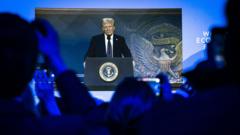
In a dramatic showcase during the annual World Economic Forum in Davos, Switzerland, President Donald Trump made headlines this week as he addressed world leaders, corporate giants, and notable celebrities via a live stream from the White House. As he commenced the communication, Trump asserted his commitment to reinvigorate the American economy, confidently proclaiming, “Nothing will stand in our way.” Among the most eye-catching aspects of his speech was his chilling warning directed at foreign businesses regarding tariffs, underscoring the administration's 'America First' mantra. Echoing sentiment akin to a powerful figure in a cinematic storyline, Trump urged foreign companies to consider relocating their factories to the U.S. to avoid crippling tariffs, which he implied could yield trillions for American coffers. The stakes were raised when he breezily suggested that Canada might even consider becoming a U.S. state, eliciting gasps from the audience, who were both enchanted and unsettled by his rhetoric. As the President touted the economic prowess and technological advancements of the U.S., many attendees appeared uncertain about the possible ramifications his administration might impose on the global trading structure. In addressing energy concerns, Trump emphasized efforts to drive down prices and suggested that pressing Saudi Arabia to lower oil costs could contribute to stabilizing geopolitical tensions, particularly regarding the conflict in Ukraine. Conspicuously present at Davos were prominent figures such as Christine Lagarde and John Kerry, who listened attentively as Trump enacted a performance that blended charm with confrontation. The central question emerged: was Trump’s bravado a serious threat to the global economy? Candid responses indicated a resounding yes, though uncertainty lingered about the effectiveness of his plans moving forward. Preparations for possible retaliatory tariffs among U.S. CEOs hints at growing anxiety within the business community about the implications of Trump's aggressive stance. As various officials, including representatives from the U.K. and E.U., engaged in discussions to mitigate tension and foster dialogue, the potential chaos following Trump’s decisions loomed large. While many in Davos were captivated by Trump's optimism around American tech supremacy, the rising competition from foreign innovations, particularly from China, raised concerns regarding future dominance in the sector. The juxtaposition of European leaders deeming Trump's approach as an opportunity to attract talent also showcased contrasting perspectives on the unfolding economic landscape. As Trump reshapes the narrative of international trade, the collective response from global leaders and businesses becomes increasingly pivotal. The insights shared at Davos will likely echo throughout the next four years, creating a delicate balance between competition and collaboration on the global stage.



