
In brief
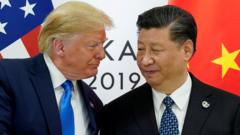
President Xi Jinping of China remains measured in his response to Donald Trump’s recent tariffs, aiming to position China as a stable and attractive trading partner amidst American unpredictability. Observers suggest that while China is enduring trade pressures, it is also looking to capitalize on shifts in global dynamics generated by Trump's "America First" policy.
Amid rising trade tensions, China is adopting a measured stance in response to recent tariffs imposed by President Donald Trump. Despite the U.S. implementing a 10% tariff on all Chinese goods, Beijing has refrained from retaliatory measures, signaling a strategic approach to what many are labeling a volatile and unpredictable relationship. The restrained reaction may reflect a desire to maintain stability as the Chinese economy navigates challenges, with concerns rising domestically about economic sluggishness. China has shifted its global trade strategy markedly over recent years, establishing stronger ties across Africa, South America, and Southeast Asia. As a result, its economy has become less dependent on American markets compared to earlier tariffs initiated by Trump in 2018. Experts, such as Chong Ja Ian from Carnegie China, interpret Beijing's calm demeanor as a sign that it might endure the new tariffs as it carefully evaluates the benefits of engaging in conflict with the Trump administration.Moreover, President Xi may be viewing this moment as an opportunity. The disarray within Trump’s administration has led many allies to ponder their role on the global stage, potentially rendering China a more appealing partner in contrast to Trump’s isolationist policies. Yun Sun, director at the Stimson Centre, notes that the erosion of U.S. leadership could favor China, which has been keen to promote a narrative of "win-win" cooperation in global affairs.China’s recent engagements on the international stage, including increased support for global organizations and efforts to deepen diplomatic relationships, including filling gaps left by U.S. funding cuts, indicate Xi’s aspiration for China to lead a new world order. Even as Beijing is wary of tensions with the U.S., it is eyeing possibilities to strengthen its global influence amidst a shifting landscape. This situation prompts concerned reactions from U.S. allies, some of whom, such as Japan, South Korea, and Australia, are increasingly wary of China's assertiveness, especially regarding maritime disputes in the South China Sea and Taiwan's status. Historically, many nations have used their alliances with Washington to navigate their economic relationships with China, but the current climate may catalyze a reconfiguration of those partnerships.Initially, the tariffs were announced just as Chinese families were welcoming the Lunar New Year, adding a layer of diplomatic sensitivity to the row. While Beijing's formal response included plans to seek legal recourse through international frameworks, time will tell how the relationship unfolds in light of Trump's unpredictable governance style. As both political parties in the U.S. adopt a more hawkish view toward China, the potential for further disruptions remains a lingering concern amidst shifting international trade landscapes. Overall, as Trump’s administration navigates its "America First" doctrine, China's strategic response reflects a careful balancing act of deflecting immediate pressures while seeking to enhance its global role in a rapidly evolving geopolitical context.

