
In brief
A blockade on major highways in Mali has left lorry drivers vulnerable to ambushes and arson attacks by Islamist militants, threatening supplies of fuel and essential goods. As the situation escalates, the Malian government is under pressure to improve security. Analysts warn that the blockade, part of a strategy by the al-Qaeda-linked militant group JNIM, aims to economically isolate the capital, Bamako, and could pave the way for broader impacts on trade and stability in West Africa.
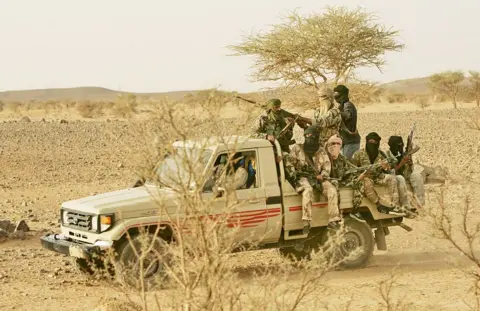
Mali's military government is grappling with the fallout from a blockade enforced by Islamist militants on significant highways, resulting in ambushes and the torching of fuel tankers, a situation that threatens to cripple the landlocked country. Prime Minister Abdoulaye Maïga has publicly recognized the urgency of the circumstances, stating that security measures are being rolled out to protect vital transport routes.
This blockade marks an alarming escalation in Mali's ongoing jihadist insurgency, particularly affecting the country's fuel supplies. Analysts warn that if the al-Qaeda-linked group Jama'at Nusrat al-Islam wal-Muslimin (JNIM) achieves its objective of isolating Bamako, the consequences could be dire.
Recent reports link the blockade's inception to the kidnapping and subsequent release of six Senegalese lorry drivers earlier this month along the Dakar-Bamako corridor. JNIM's strategy appears increasingly bold, establishing checkpoints to control the flow of goods and demanding 'taxes' from traders.
The situation has forced entire villages into economic standstill, with markets closed and public services disrupted. In response, the Malian army has conducted airstrikes against militant positions in attempts to re-establish control, yet local fears remain high with continued militant operations on major routes.
Kayes holds strategic importance for Mali, contributing significantly to the nation's gold supply and serving as a key logistics hub for trade. The blockade not only threatens local livelihoods but also risks destabilizing the broader economy, compelling urgent dialogue on regional security implications and the potential for violence to escalate beyond Mali's borders.
As Mali's security crisis deepens, the reliance on military might, including support from mercenary groups, faces scrutiny. The blockade highlights a tactical shift by militants to economically undermine the Malian state, raising alarm over regional stability and trade dynamics in West Africa.
