
In brief
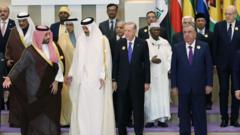
In a recent summit of Muslim and Arab leaders, the Crown Prince criticized Israel's military operations not only in Gaza but also in Lebanon and Iran, emphasizing the need for an immediate ceasefire.
Saudi Arabia's foreign minister decried the international community's inaction, while leaders at the summit called for a complete Israeli withdrawal from Palestinian territories. The death toll in Gaza has reached alarming levels, raising humanitarian concerns and calls for a cessation of hostilities.In a striking assertion of accountability, Saudi Crown Prince Mohammed bin Salman has described Israel's military actions in Gaza as "genocide," marking one of the most significant public condemnations by a Saudi official since the onset of the war. Addressing a summit of Muslim and Arab leaders, the prince also criticized Israeli attacks on Lebanon and Iran. Israel has denied these allegations, claiming that their military operations are not genocidal. In a turn signaling the possible thaw in relations, Prince Mohammed cautioned Israel against any military actions targeting Iranian territory. Alongside other leaders, he called for Israel to fully withdraw from both the West Bank and Gaza Strip. Saudi Foreign Minister Faisal Bin Farhan Al-Saud highlighted the failure of the international community to halt the violence, condemning Israel for contributing to the dire humanitarian crisis in Gaza. This turmoil erupted following a severe assault by Hamas on Israeli soil on October 7, 2023, prompting an extensive retaliatory campaign that has reportedly resulted in over 43,000 fatalities in Gaza, predominantly affecting women and children, according to the UN’s Human Rights Office. During the summit, participants criticized what they labeled ongoing Israeli assaults on UN personnel and facilities, raising alarm over a recently passed Knesset bill aimed at hindering the operations of the UN Palestinian refugee agency, Unrwa, in Israel and East Jerusalem, which has drawn condemnation from various countries including the US and the UK.Amid these developments, the return of former US President Donald Trump to the political scene looms large, with Gulf leaders hopeful he may leverage his influence to rekindle peace negotiations. Notably, Trump's past decisions, including the recognition of Jerusalem as Israel’s capital, have fostered mixed feelings among Saudi audiences, yet optimism remains regarding potential stability in the region. Reference to an editorial in a prominent Saudi newspaper highlights the hopeful sentiment surrounding Trump’s resurgence in Middle Eastern diplomacy. As the region grapples with both optimism and uncertainty, the intensity of the ongoing conflict necessitates urgent responses from global leaders.
