June 23, 2025, 9:10 a.m. ET
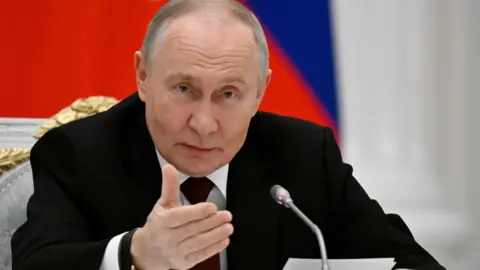
Russian President Vladimir V. Putin hosted Iran's foreign minister, Abbas Araghchi, in Moscow on Monday, marking the first official encounter between high-ranking officials of the two nations since the onset of Israel's military actions against Iran on June 13. The violence has seen Israel targeting Iranian air defenses and nuclear sites, while Iran retaliated with missile strikes on Israeli positions.
During the meeting, Putin conveyed his support for Iran by condemning the "absolutely unprovoked aggression against Iran," as highlighted in a Kremlin release. He emphasized Russia's commitment to assist the Iranian populace while avoiding overt provocations towards the U.S. military, which has recently engaged in the ongoing conflict.
Despite Putin's articulated support, he refrained from directly blaming the U.S. or Israel for their military efforts against Iran. The statements from Araghchi contrasted with this more cautious rhetoric, where he openly criticized the actions of both countries. Kremlin spokesperson Dmitri S. Peskov echoed similar sentiments, backing Iran while not committing to military or financial support that could strain relations with the United States or distract from Russian engagements elsewhere.
In the background of these discussions, the Kremlin has been positioning itself as a potential mediator to foster dialogue aimed at quelling the escalating violence. While details on military support remain ambiguous, Peskov indicated Russia is observing Iran’s needs as the situation develops. This diplomatic maneuvering signifies Russia's strategy to strengthen ties with Iran while navigating the complex landscape of international relations amid ongoing tensions.
Anatoly Kurmanaev covers the dynamics of Russian policies and their implications following global conflicts.
Russian President Vladimir V. Putin hosted Iran's foreign minister, Abbas Araghchi, in Moscow on Monday, marking the first official encounter between high-ranking officials of the two nations since the onset of Israel's military actions against Iran on June 13. The violence has seen Israel targeting Iranian air defenses and nuclear sites, while Iran retaliated with missile strikes on Israeli positions.
During the meeting, Putin conveyed his support for Iran by condemning the "absolutely unprovoked aggression against Iran," as highlighted in a Kremlin release. He emphasized Russia's commitment to assist the Iranian populace while avoiding overt provocations towards the U.S. military, which has recently engaged in the ongoing conflict.
Despite Putin's articulated support, he refrained from directly blaming the U.S. or Israel for their military efforts against Iran. The statements from Araghchi contrasted with this more cautious rhetoric, where he openly criticized the actions of both countries. Kremlin spokesperson Dmitri S. Peskov echoed similar sentiments, backing Iran while not committing to military or financial support that could strain relations with the United States or distract from Russian engagements elsewhere.
In the background of these discussions, the Kremlin has been positioning itself as a potential mediator to foster dialogue aimed at quelling the escalating violence. While details on military support remain ambiguous, Peskov indicated Russia is observing Iran’s needs as the situation develops. This diplomatic maneuvering signifies Russia's strategy to strengthen ties with Iran while navigating the complex landscape of international relations amid ongoing tensions.
Anatoly Kurmanaev covers the dynamics of Russian policies and their implications following global conflicts.