In a tragic turn of events on Saturday, a massive explosion rocked Shahid Rajaee port, Iran's largest commercial gateway, resulting in at least 40 fatalities and injuring over 1,000 individuals. The explosion unleashed thick black smoke, prompting panic and urgent medical responses from citizens across the nation, many of whom rushed to donate blood for the victims.
With fires continuing to rage in the aftermath, the health ministry has advised residents in nearby towns to stay indoors and protect themselves from toxic fumes. In Bandar Abbas, the closest major city, all educational institutions and government offices were shut down to facilitate emergency operations, according to state television reports.
As the nation observes a day of mourning on Monday, the atmosphere has shifted from sorrow to escalating anger. Residents are questioning how such a catastrophic incident could occur, especially amid reports suggesting that the fires—which seemed to emanate from improper storage of hazardous materials—may have been linked to military-grade materials.
Authorities from Ambrey Intelligence have suggested that the explosion was likely caused by mishandled containers of solid fuel, specifically sodium perchlorate, used in missile production. Despite the denials of military involvement from army spokespeople, speculation continues to swirl on social media regarding the potential link to military storage at the port.
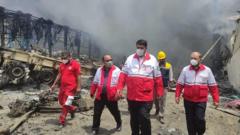
President Masoud Pezeshkian visited the site, promising a thorough investigation into the incident. Meanwhile, the defense ministry has stated that no military-grade cargo was present, asserting that the blast stemmed from hazardous materials stored improperly. There is already concern about the impending economic impact, as Shahid Rajaee port is crucial for nearly 80% of Iran's imports, with officials warning of possible shortages despite later reassurances that other port sections remain operational.
Images from the disaster scene displayed helicopters dropping water on the ongoing fires, while emergency responders battled to manage the fallout from the explosion. International responses have begun pouring in, with condolences from various nations, including Russia and China, where three Chinese nationals were reportedly injured but remain stable.
As the explosion coincided with high-level discussions over Iran's nuclear program, it raises further questions about the regime's priorities amidst ongoing frustrations regarding governmental oversight and accountability in matters of public safety.