The ongoing conflict in Gaza has culminated in widespread food shortages, leading to chaotic scenes as residents desperately seek sustenance. Following a partial lift of the Israeli blockade, a limited number of aid trucks carrying food have started entering the strip, yet the amount remains woefully inadequate for the 2.1 million inhabitants in need.
On Thursday, bakeries faced overwhelming crowds that forced them to suspend operations, revealing a troubling picture of desperation across the region. Tensions escalated further when an armed ambush targeted a World Food Programme (WFP) convoy, leading to a firefight with Hamas security officers. Israeli drones subsequently struck, heightening concerns over safety and security for those involved in aid distribution.
Hamas condemned the drone strikes as a "horrific massacre," while the Israeli Defense Forces (IDF) stated their actions were necessary to prevent supplies from falling into militant hands. Despite over 130 aid trucks crossing the border in recent days, humanitarian organizations reported that approximately 500 to 600 trucks of supplies are still needed daily to adequately address the crisis in Gaza.
Philippe Lazzarini, head of UNRWA, voiced concern over the looting of aid, pointing out that the ongoing deprivation of necessities has fueled anger and desperation among the populace. Eyewitness accounts from locals reveal the gravity of the situation as families express frustration over aid distribution methods, calling for direct flour assistance instead of pre-baked goods.
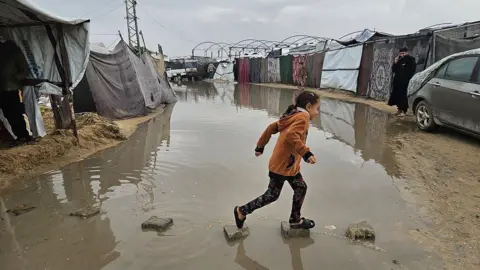
Residents like Abd al-Fatah Hussein shared harrowing accounts of life in displacement camps characterized by shortages of electricity, water, and medical supplies. Meanwhile, medical professionals described the effects of malnutrition among women and children, who report extreme physical distress due to inadequate food intake.
As the situation deteriorates, some families remain in homes labeled for evacuation due to ongoing military operations. With substantial bombardment continuing and aid supplies barely trickling in, families are left grappling with a bleak existence amid insecurity. The international community remains watchful, yet calls for urgent action and increased aid prolong the struggle for survival in a region besieged by crisis.
On Thursday, bakeries faced overwhelming crowds that forced them to suspend operations, revealing a troubling picture of desperation across the region. Tensions escalated further when an armed ambush targeted a World Food Programme (WFP) convoy, leading to a firefight with Hamas security officers. Israeli drones subsequently struck, heightening concerns over safety and security for those involved in aid distribution.
Hamas condemned the drone strikes as a "horrific massacre," while the Israeli Defense Forces (IDF) stated their actions were necessary to prevent supplies from falling into militant hands. Despite over 130 aid trucks crossing the border in recent days, humanitarian organizations reported that approximately 500 to 600 trucks of supplies are still needed daily to adequately address the crisis in Gaza.
Philippe Lazzarini, head of UNRWA, voiced concern over the looting of aid, pointing out that the ongoing deprivation of necessities has fueled anger and desperation among the populace. Eyewitness accounts from locals reveal the gravity of the situation as families express frustration over aid distribution methods, calling for direct flour assistance instead of pre-baked goods.
Residents like Abd al-Fatah Hussein shared harrowing accounts of life in displacement camps characterized by shortages of electricity, water, and medical supplies. Meanwhile, medical professionals described the effects of malnutrition among women and children, who report extreme physical distress due to inadequate food intake.
As the situation deteriorates, some families remain in homes labeled for evacuation due to ongoing military operations. With substantial bombardment continuing and aid supplies barely trickling in, families are left grappling with a bleak existence amid insecurity. The international community remains watchful, yet calls for urgent action and increased aid prolong the struggle for survival in a region besieged by crisis.