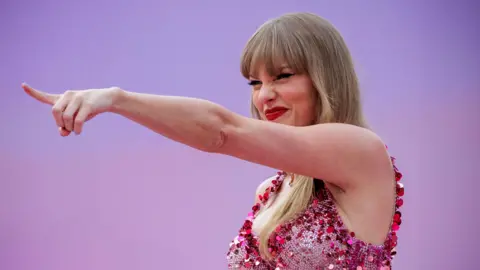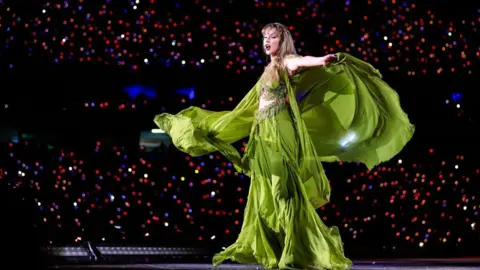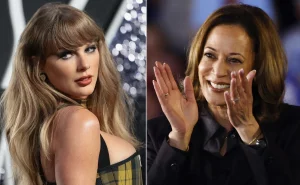
Taylor Swift’s endorsement of Kamala Harris in the 2024 presidential election has generated varying reactions from the American public. While Swift's extensive fan base might appear beneficial for a candidate, a recent YouGov poll suggests her backing might be more of a liability than an asset for Harris. The poll indicates that only 8% of voters are “somewhat” or “much more likely” to support Harris due to Swift’s endorsement, whereas 20% say they are “somewhat” or “much less likely” to vote for her ticket. This highlights the complex nature of celebrity endorsements in politics, where popularity doesn't necessarily equate to political advantage.
Despite this, Swift has driven considerable online activity. After she shared a link on Instagram, there was a significant increase in visits to vote.gov, though it is unknown how many voter registrations resulted or what political affiliations they held. This increase in traffic shows Swift's power to engage her audience online. However, critics were not surprised by her endorsement, as she is known for supporting Democratic candidates like Joe Biden in 2020. Her statement, “I’ve done my own research and I’ve made my choice,” faced criticism for not offering new insights given her outspoken opposition to Republicans.
The excitement around Swift's political involvement also led to rumors about her potentially performing at the Democratic National Convention with Beyoncé. Although these rumors proved unfounded, they draw attention to the strategy of using celebrity appeal to attract support for the Harris campaign. While Swift’s endorsement keeps Harris in the spotlight, the real question remains whether this will convert into votes. Harris must weigh the benefits and risks of associating with polarizing figures whose influence might not translate into electoral success.
Despite this, Swift has driven considerable online activity. After she shared a link on Instagram, there was a significant increase in visits to vote.gov, though it is unknown how many voter registrations resulted or what political affiliations they held. This increase in traffic shows Swift's power to engage her audience online. However, critics were not surprised by her endorsement, as she is known for supporting Democratic candidates like Joe Biden in 2020. Her statement, “I’ve done my own research and I’ve made my choice,” faced criticism for not offering new insights given her outspoken opposition to Republicans.
The excitement around Swift's political involvement also led to rumors about her potentially performing at the Democratic National Convention with Beyoncé. Although these rumors proved unfounded, they draw attention to the strategy of using celebrity appeal to attract support for the Harris campaign. While Swift’s endorsement keeps Harris in the spotlight, the real question remains whether this will convert into votes. Harris must weigh the benefits and risks of associating with polarizing figures whose influence might not translate into electoral success.