
In brief
As Iran ramps up its uranium enrichment to 60% purity, fears grow regarding its implications for regional stability and nuclear proliferation. The head of the UN nuclear agency emphasizes the urgency for safeguards as discourse surrounding nuclear armament becomes normalized.
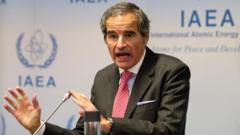
The International Atomic Energy Agency (IAEA) has voiced significant concerns over Iran's recent decision to escalate uranium enrichment activities, with its director general, Rafael Grossi, labeling the move as "very worrisome." Speaking to the BBC, Grossi indicated that Iran is amassing a stockpile of uranium enriched to 60%, a level dangerously close to the threshold required for the production of nuclear weapons.This development is perceived by many in the Middle East as Iran's strategic response to its recent military and diplomatic challenges in regions such as Syria, Lebanon, and Gaza. Grossi pointed out that while some Iranian politicians openly advocate for nuclear weapon development, the current leadership does not appear inclined to pursue that path.At the Manama Dialogue conference in Bahrain, Grossi underscored the severe repercussions that an Israeli attack on Iranian nuclear facilities could provoke, warning of significant military retaliation from Tehran and potential radiation risks. He also expressed deep concern about the global inclination towards nuclear armament, reflecting a disturbing trend in public dialogue surrounding the acceptability of nuclear weapons.Recent reports from the IAEA revealed that Iran has begun feeding more partially enriched uranium into centrifuges at the Fordow nuclear site, with projections suggesting that output will soar to 34 kg of 60%-enriched uranium per month—up from a mere 4.7 kg previously. Grossi urged the agency to implement further safeguards at Fordow to ensure the facility is not being misused or producing higher enrichment levels than reported by Iran.Despite Iran's dismissal of a military nuclear program, Grossi stressed that the country has advanced significantly in its nuclear capabilities over the last decade. The discrepancy between Iran's nuclear realities in 2015 versus 2025 highlights the urgency of the situation, raising fears that Iran is on a faster track towards developing nuclear weapons if it so chooses.Efforts to engage in diplomatic talks over Iran’s nuclear ambitions have shown little progress, and Grossi recently recalled assurances from Iranian officials to limit 60% uranium production. However, skepticism remains, especially as more factions within Iran express a desire to independently develop nuclear weapons.The potential repercussions of military actions against Iran’s nuclear program could be catastrophic. Grossi warned that such actions would necessitate significant military force and would likely escalate tensions further. He feels it is crucial to avoid conflict and hopes for a resolution through dialogue, as the ramifications of attacking a nuclear facility could include severe radioactive fallout.Grossi also pointed out that the existing global nuclear non-proliferation framework is under considerable strain, with nuclear-armed states modernizing their arsenals, prompting other nations to contemplate their own nuclear capabilities. The shifting narratives around nuclear weapons signify a troubling trend that, if unaddressed, could lead to widespread proliferation and increase international tensions.

