
In brief
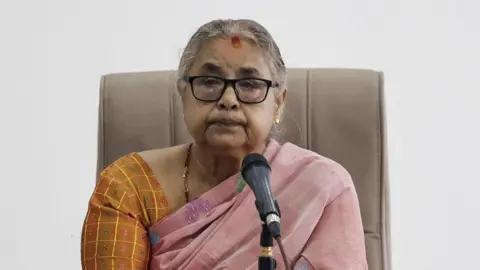
In a significant political development, Sushila Karki, who has been appointed as Nepal's interim prime minister in the wake of violent protests, has pledged to lead for a maximum of six months. Karki's administration aims to address public concerns, including corruption and economic equality, before upcoming elections slated for March 5. Her leadership comes at a critical juncture as the nation grapples with unrest that recently claimed over 70 lives. Promising to work in line with the aspirations of Nepal's younger generation, Karki signals a commitment to reform amidst challenges of law, order, and governance.
Nepal's newly-appointed interim prime minister, Sushila Karki, has stated her intention to govern for a duration not exceeding six months, taking office amidst the haze of civil unrest. I did not wish for this job. It was after voices from the streets that I was compelled to accept, Karki remarked, emphasizing her commitment to transfer power to an elected government after the elections planned for March 5 next year.
Karki's ascension to the role follows explosive protests over corruption, which have seen over 70 individuals lose their lives in violent clashes. Her appointment was a result of negotiations with leaders of the youth-driven Gen Z movement, highlighting a public demand for governmental reform.
Addressing the needs of the young protesters, Karki expressed, We have to work according to the thinking of the Gen Z generation, advocating for the cessation of corruption, the establishment of good governance, and the promotion of economic equality.
The protests ignited, reportedly over a ban on social media platforms, on September 8 and escalated into disorder marked by vandalism against political figures and the torching of parliament. In her public statement, Karki expressed shame at the destruction carried out by her compatriots, questioning their loyalty to the nation.
As a former chief justice with a reputation for integrity, Karki has inherited a tumultuous political landscape that requires the restoration of law and order, as well as the rebuilding of critical public structures. Faced with expectations from the Gen Z movement and a population wary of potential democratic backsliding, her interim cabinet will have to navigate a path of substantial reform in the coming months.


