
In brief
A recent study reveals that climate change has significantly exacerbated flooding in Spain, with scientists noting that rising temperatures lead to increased rainfall intensity. They warn that infrastructure is not adequately prepared for the extreme weather driven by climate change.
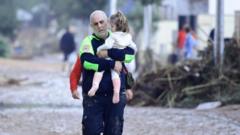
Recent floods in Spain have been attributed to the intensifying effects of climate change, according to a group of scientists. While they are cautious not to attribute any single event directly to global warming, researchers are unanimous in their findings that recent flood scenarios have been worsened by rising temperatures. Dr. Friederike Otto from Imperial College London, who spearheads an international scientific group studying climate influences on weather events, stated, “These heavy downpours were undoubtedly intensified by climate change.” The dramatic increase in rainfall is tied to the warming atmosphere, which can hold more moisture - compounding the severity of storms. The current flooding is significantly linked to a natural occurrence known as "gota fría" or cold drop, which typically strikes Spain during the autumn and winter months. In this phenomenon, cold air collides with warmer Mediterranean waters, which have been exceptionally hot in recent years, resulting in the rapid formation of towering clouds that unload intense rainfall once reaching land.The impact of climate change is quantitatively noted, with researchers estimating that for every degree of global warming, the amount of rain produced by such storms may increase by up to 7%. Professor Mark Smith from the University of Leeds pointed out that prolonged summer heat contributes to baked soils, diminishing their ability to absorb water, leading to rapid runoff into rivers and exacerbating flooding conditions.Further discussions within the scientific community suggest that a changing climate might lead to slower-moving storms, which can lead to even more rainfall being dropped over a given area. The aftermath of such intense weather was starkly visible when Storm Boris struck in September, wreaking havoc across Central Europe. Scientists revealed that the likelihood of such storms was significantly increased by climate change.In Spain, the suddenness and severity of the floods have raised concerns about the effectiveness of early warning systems. Meteorologists acknowledge the challenges in predicting the exact paths of fast-moving storms. Dr. Linda Speight from the University of Oxford emphasized that while timely warnings can save lives, intense thunderstorms are complex and location-specific predictions are notoriously difficult.Additionally, the floods exposed the inadequacies of contemporary infrastructure to manage extreme weather events. Researchers argue that most of our roads, bridges, and drainage systems were designed to withstand weather patterns of the past century, rather than the intensified conditions of today's climate. As the world grapples with the far-reaching effects of climate change, it’s clear that adaptive strategies must be prioritized in order to mitigate future disasters.


