
In brief
In the Shennongjia region of China, conservationists are combating the decline of the golden snub-nosed monkey, a species that plummeted to under 500 individuals due to habitat destruction and hunting. With enhanced protections and community involvement, their population has now rebounded to over 1,600. The story highlights the critical role of Professor Yang Jingyuan, who has dedicated his career to understanding and safeguarding these unique primates.
The battle to save China’s rare snub-nosed monkey
Until the 1980s, the mountains of Shennongjia in central China were plagued by hunting and logging that devastated the golden snub-nosed monkey population, dropping it below 500 in the wild.
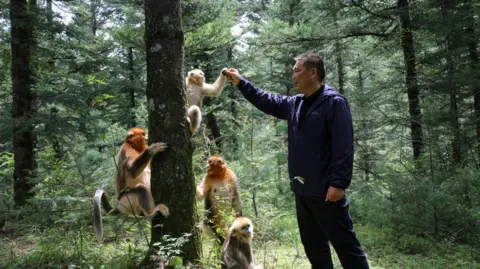
The narrative has changed since Professor Yang Jingyuan began his conservation efforts in 1991. As the director of the Shennongjia National Park Scientific Research Institute, Yang has been integral in implementing protections and fostering local awareness about the rare species.
Today, the population has improved significantly, with over 1,600 monkeys documented, a testament to effective conservation strategies that involve local communities. Farmers who once contributed to habitat destruction are now enlisted as protectors of the environment.
Yang's deep understanding of the monkeys includes awareness of their complex social structures and communication methods, allowing for better protection and study of their behavior. The community's transition from hunters to conservationists illustrates the power of collaboration in conserving biodiversity.
Efforts have evolved to ensure sustainable habitat for these monkeys, reflecting in improved forest coverage, which is currently at about 96%. Their future appears promising, with expectations that the population may surpass 2,000 in the next decade.
