MIDLAND, Texas — Li Chuanliang, a retired Chinese official, found himself in a precarious position as he recuperated from cancer on a Korean resort island. An urgent warning from a friend reached him: Don’t return to China. You’re now a fugitive. Fearing for his life, Li fled to the U.S. and sought asylum, but the Chinese government continued its relentless pursuit.
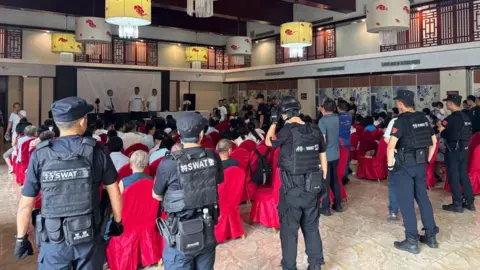
Despite his new home in America, Li’s life has been upended by intrusive surveillance measures employed by Chinese authorities. His movements are closely monitored, assets seized, and over 40 of his friends and family members have been detained, tracked through high-tech facial recognition systems.
They track you 24 hours a day. All your electronics, your phone—they’ll use every method to find you, your relatives, your friends, where you live, Li revealed. No matter where you are, you’re under their control. These revelations are part of a broader systemic abuse of surveillance technology, including tools from American firms, which are used to enforce political conformity and suppress dissent.
China’s government claims it is fighting corruption by utilizing this technology, asserting that nearly 900,000 officials were punished last year—a number markedly higher than in previous years. Critics argue this same surveillance infrastructure entraps dissidents and exiles, showcasing an alarming trend of state-sponsored intimidation designed to project power beyond its borders.
Outside of China, Li’s life continues to be monitored through operations known as “Fox Hunt” and “Sky Net,” which are intended to reclaim fugitives and intimidate those who challenge the regime. According to reports, more than 14,000 people have been returned to China through coercion and manipulation.
They’re actively pursuing those people who fled China, demonstrating their power, commented Yaqiu Wang from the University of Chicago, highlighting the chilling effect of such operations. This situation raises pressing questions about the nature of international law and sovereignty in the face of modern technological capabilities.
Li commented on the overwhelming fear experienced by exiled officials, stating, Electronic surveillance is the arteries for China to project power into the world... each step that every one of your relatives takes is being monitored and analyzed with big data. It’s absolutely terrifying. As Li continues his fight for a safe haven in the U.S., his story exemplifies the lengths to which authoritarian regimes will go to silence dissenters, and the evolving role of technology in upholding oppressive systems.