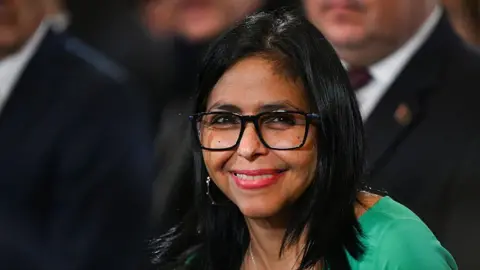
Amid the many questions swirling since last weekend's dramatic events in Caracas, one that refuses to go away centers on the bespectacled woman now leading what US officials are calling Venezuela's interim authorities.
Why Delcy?
What is it about Delcy Rodríguez, daughter of a former Marxist guerilla and deputy to ousted dictator Nicolas Maduro, that has caught the eye of the Trump administration? And why has Washington decided on an avowed Chavista revolutionary to stay in power, rather than backing the opposition leader, María Corina Machado, whose opposition movement is widely believed to have won the 2024 presidential elections?
The answer, according to former US Ambassador to Venezuela Charles Shapiro, is simple: They've gone for stability over democracy. He noted that the administration has kept the dictatorial regime in place without the dictator himself, which he describes as risky.
Shapiro pointed out that backing Machado could have led to risks of infighting among opposition figures and alienation of the significant portion of the population that supported Maduro.
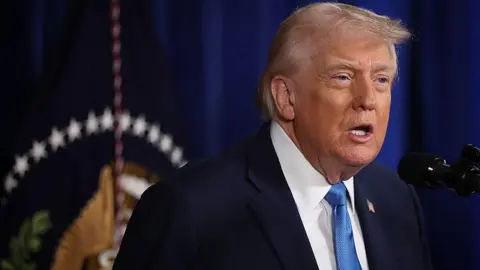
In Trump's dramatic press conference, he downplayed Machado's credibility by calling her not respected in Venezuela, while praising Rodríguez as gracious. This disqualification of Machado, who was widely elected, raised eyebrows among political analysts. Former deputy chief of the US embassy in Caracas, Kevin Whitaker, expressed surprise at Trump's dismissal of Machado, believing it undermined the entire opposition movement.
Speculation emerged that Rodríguez may have had a role in the quick ousting of Maduro due to a well-coordinated plan for regime change. However, some analysts argue that significant power still lies with Maduro's loyal allies, casting doubt on the likelihood of Rodríguez betraying her former boss for personal gain.
Strategists warned against regime change, positing that it could lead to violence and chaos in Venezuela. The US intelligence community reportedly assessed that Rodríguez was in a better position to lead temporarily, as the risks of violence after a complete government overhaul could be catastrophic.
Despite the reservations from analysts, the Trump administration’s decision seemingly illustrates a pragmatic approach focused on stability. Rodriguez's background as a potential economic reformer and her willingness to embrace foreign investment may create an avenue for reduced tensions with the US.
Although some observers see the decision to back Rodríguez as a reasonable choice, they lament the lack of a framework for genuine democratic transition. The Trump administration's focus on stability first and an economic-led plan for Venezuela appears to prioritize the interests of the US over the rights of ordinary citizens who have long suffered under governance devoid of legitimacy.