In brief
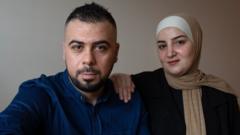
Douna Haj Ahmed discovered her husband Abdullah Al Nofal's horrific experiences in Syria's infamous detention center, Al-Khatib, after the fall of Bashar al-Assad. As he opened up about his trauma for the first time, they highlighted the ongoing need to share stories of suffering amidst a backdrop of systemic human rights abuses.
Douna Haj Ahmed, a Syrian refugee residing in London, recently unearthed the haunting past of her husband, Abdullah Al Nofal, during a news segment featuring fleeing prisoners from Syria's oppressive regime. This pivotal moment occurred in early December, shortly after rebel forces deposed President Bashar al-Assad. Abdullah, visibly shaken, revealed, “This is where I was arrested,” referencing the notorious Al-Khatib prison, notorious for its brutal treatment of detainees. The emotional revelation struck Douna deeply, as her husband’s initial reluctance to discuss his traumatic experiences finally shattered her expectations. “It was a turning point. I saw him weak. I saw him crying,” she expressed. “We want people to hear what Syrians went through.” In July 2013, Abdullah was a storekeeper in Damascus working with the International Committee of the Red Cross when armed forces detained him at a checkpoint due to his previous participation in peaceful protests against Assad’s regime in 2011. Although he distanced himself from protests that escalated into violence, Abdullah became a target. Blindfolded and handcuffed, he was taken to a military facility and placed in solitary confinement for three days, enduring severe isolation and violence.Abdullah endured subsequent torture at Al-Khatib prison, where he witnessed firsthand the inhumane treatment of over 130 fellow inmates. The Assad regime's crackdown resulted in the torture and death of approximately 60,000 detainees, as reported by the Syrian Observatory for Human Rights. Years later, a German trial found a Syrian officer linked to Al-Khatib guilty of crimes against humanity, serving as a reflection of the widespread abuse carried out by the regime.Describing his harrowing experience, Abdullah recalled hearing the tortured cries of fellow prisoners, and witnessing their suffering up close. “If you are not tortured yourself, every minute they will take someone to the investigation," he said. “They will get back to the room full of blood,” reliving traumatic moments that haunt him to this day.After a month of torment, Abdullah was released, fortunate compared to many trapped in the regime's lair. He later escaped Syria, receiving scholarships abroad, and eventually settled in London with Douna. As they embraced their newfound freedom, Abdullah felt compelled to share their story. “We are really free right now,” he affirmed, urging for voices like his to be heard. Douna, who is also a human rights activist, was profoundly affected as her husband opened up about his ordeal. “Every time I feel that this regime has reached the maximum of the horrors... it surprises me there could be more,” she remarked, highlighting the countless untold stories of suffering. Her sentiments echo a call to action for awareness of the atrocities inflicted upon those unable to share their stories in the midst of a continuing humanitarian crisis in Syria.