In one of India's coldest and most remote regions, a group of women have taken on an unlikely role: protecting one of Asia's most elusive predators, the snow leopard.
Snow leopards are found in just 12 countries across Central and South Asia, with India being home to one of the largest populations. A nationwide survey in 2023 estimated over 700 snow leopards in India, marking a critical evaluation of their existence.
Among their habitats is Kibber village in Himachal Pradesh's Spiti Valley, a stark, high-altitude cold desert. Here, these big cats are often referred to as the ghosts of the mountains, seldom seen due to their elusive nature.
For generations, snow leopards were perceived as a threat for preying on livestock, but attitudes are beginning to shift. The villagers are increasingly recognizing the snow leopard's role as an apex predator, essential for maintaining the region's fragile ecosystem.
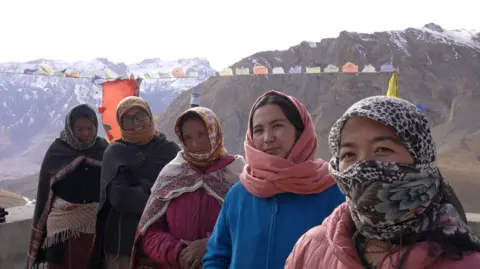
Currently, about a dozen local women are working with the Himachal Pradesh forest department and conservationists to track and protect these magnificent animals. Known as Shenmo, the group is trained in using camera traps to monitor snow leopard activity effectively.
Lobzang Yangchen, a local coordinator, recalls, Earlier, men used to install the cameras, and we wondered why we couldn't do it too. Their efforts are crucial for the ongoing snow leopard survey, which indicated a population increase in the region.
The survey documented snow leopards and 43 other species using camera traps spread across vast areas. Conservationists praise the contribution of these women, highlighting their critical role in wildlife monitoring.
Winter data collection is especially demanding, often requiring the women to trek several kilometers across high altitudes to monitor the leopards’ habitats. They overcome challenges associated with harsh weather and rugged terrain, all while balancing household duties.
Through their involvement, these women earn a modest income of around 500 to 700 rupees per day and are transforming community perceptions of snow leopards from feared enemies to valuable allies in conservation. Their work also empowers their communities by promoting predator-proof livestock arrangements and access to insurance schemes.
Spiti Valley's recent inclusion in the UNESCO-recognized Cold Desert Biosphere Reserve signifies a growing recognition of the region's biodiversity and the importance of integrating community participation in conservation efforts.
The initiative not only enhances the relationship between the local populace and nature but also solidifies the role of women as key players in wildlife conservation strategies. As climate change continues to impact fragile ecosystems, the efforts and participation of communities are becoming increasingly vital.