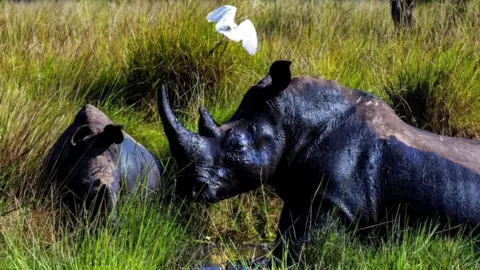
Namibia's Rhino Horn Trade Proposal Rejected Amid Conservation Concerns
Namibia's proposals to lift the ban on the international trade in black and white rhino horns have been rejected at a key conservation meeting. The result of the voting at the Convention on International Trade in Endangered Species of Wild Fauna and Flora (CITES) earlier this week was adopted by the conference on Thursday in Samarkand, Uzbekistan.
Namibia had also proposed overturning the ban on African savanna elephant ivory - this too was defeated.
Eyebrows were raised about the rhino horn trade proposals mainly because Namibia pioneered the practice of cutting the horns off rhinos in 1989 so they no longer have value for poachers.
Dehorning was followed by other southern African countries, such as Zimbabwe, Eswatini, and South Africa, where rhino horns are prized in traditional Asian medicine and also serve as status symbols in several southeast Asian countries.
Namibia's dual proposals - one for black rhinos and the other for southern white rhinos - were met with overwhelming opposition, garnering only around 30 votes in favor out of approximately 120 required to achieve a two-thirds majority for adoption.
Despite the ongoing challenges, including record high rhino poaching rates in Namibia, where 87 were killed last year, discussions surrounding legal trade remain contentious. Proponents argue it could generate revenues for conservation efforts, while opponents warn it might exacerbate demand and increase poaching.
Namibia and other southern African nations maintain substantial stockpiles of rhino horn – an estimated 6.45 tonnes from white rhinos and 4.6 tonnes from black rhinos. This is due, in part, to their dehorning programs that aim to protect rhinos from poachers by removing their horns.
Experts have raised concerns that any legal trade reminiscent of the cycles seen in the past may lead to a resurgence of poaching, echoing historical crises from the 1970s and 1980s. The debate continues as nations weigh the complexities of wildlife conservation against economic interests.