
In brief
France’s Gironde region is battling a new kind of fire – a pyrocumulonimbus, or fire‑generated thunderstorm that lifts smoke, ash and water vapour high into the atmosphere. These towering clouds can blow embers across vast distances and spark new fires, making the blaze unpredictable. Similar events have been seen in Australia’s Black Summer and California’s 2021 summer fires, highlighting how extreme heat and dry conditions fuel them. Climate change is expected to increase the frequency of such deadly fire‑storms, calling for new firefighting strategies.
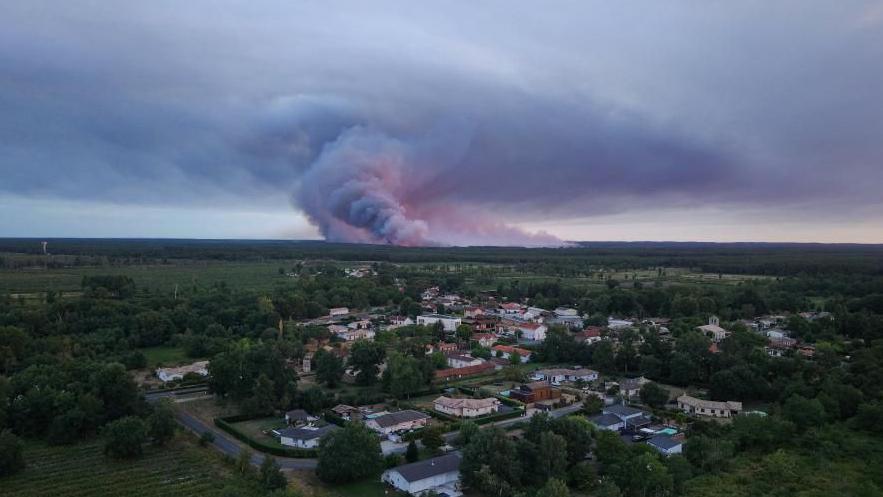
The Gironde region around Bordeaux is still in the grip of a massive wildfire that has given rise to a rare phenomenon: a pyrocumulonimbus cloud, sometimes called a fire‑generated thunderstorm. The intense heat from the flames lifts vast amounts of smoke, ash and water vapour upward, where it cools and condenses into a towering cloud that behaves like a weather system.
These clouds can generate violent updrafts, launching embers dozens of kilometres ahead of the front. The result is a fire that not only burns through vegetation but can also ignite new blazes far from the original site. Lightning produced by the storm adds another risk, striking and sparking fresh fires.
Firefighters in the area say this unprecedented event has made containment efforts harder: the moving, unpredictable fire front and the ability of embers to travel far feather the already dangerous blaze. The prefecture reports that the situation for the night was broadly stable, but a new heatwave could lengthen the fight, with temperatures projected to reach 40°C.
Pyrocumulonimbus clouds have appeared in other parts of the world during periods of extreme heat. In 2019‑20 the Black Summer bushfires in Australia generated towering “fire‑bombs” that pushed embers 30 kilometres ahead of the front. The 2021 summer in California saw smoke‑laden storms rise a mile into the atmosphere, spreading fires across the western states.
Scientists point to climate change as a driver for these rare but deadly events. High temperatures, relentless heat, strong winds, and scant moisture create ideal conditions for the atmosphere to become unstable, allowing fires to feed their own weather systems. As global temperatures climb, experts warn that more pyrocumulonimbus storms may become normal, demanding new firefighting techniques and better preparedness from communities.

