
In brief
France’s latest mortality statistics show a 29 % rise in deaths during the last week of June as the continent endured a scorching heatwave. Health officials warned of underreported figures and a 62 % jump in the Paris region alone, while the environment struggled with wildfires and drownings. Climate experts underscore Europe’s rapid warming faster than the global average, heightening the risk of extreme events and stressing water supplies. As Britain expects a similar heat surge, the United States faces early July heatwaves, illustrating a global pattern of climate‑driven extremes.
France measured a sharp rise in mortality during the last week of June after an unseasonably severe heatwave that sprayed temperatures across the continent.
Health officials billed the death toll as "clear increase", with older people over 45 seeing a 29 % jump compared with the week before.
The Public Health France agency announced that deaths from 22 to 28 June spiked by 2,025 — a 62 % surge in the Paris region alone. French health minister Stéphanie Rist said the figures were likely under‑estimates and that mortality could rise further.
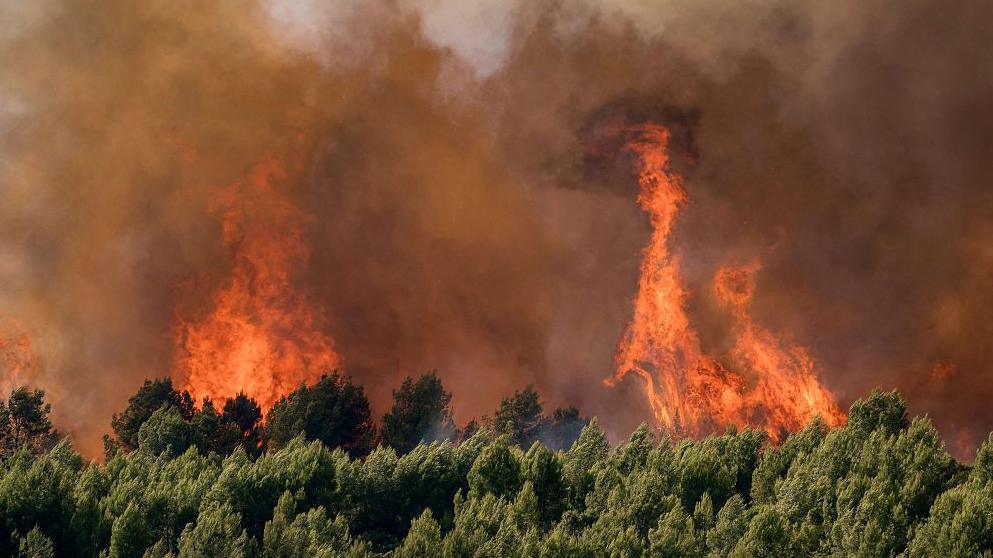
Alongside the pressure on human health, the hot spell triggered a string of wildfires across southern France. Interior Minister Laurent Nuñez reported 72 drownings since 18 June, largely in rivers near the high temperatures. In north‑eastern France, near 7,000 fires have already burned almost 8,700 hectares.
Climate scientists note that Europe is cooling at twice the global average, producing more intense heatwaves, higher pressure on water resources, and an elevated risk of fire. On the horizon, a new high‑pressure ridge is pushing heat toward Britain, while Sweden and Germany experience higher temperatures in the coming week.
In the United Kingdom, temperatures will reach the mid‑30s, and residents should heed health advisories and stay hydrated. Meanwhile in the U.S., the seventh‑independence holiday is already seeing soaring temperatures in the Midwest and East, echoing Europe’s crisis.
The surge highlights how climate‑driven extremes are forcing national health systems to respond swiftly, as heat‑related mortality climbs worldwide in record‑setting summer seasons.
