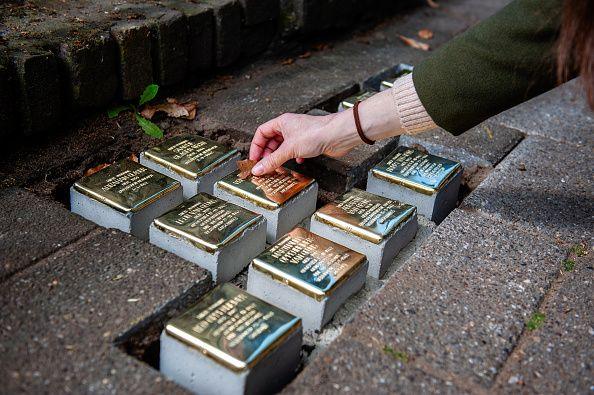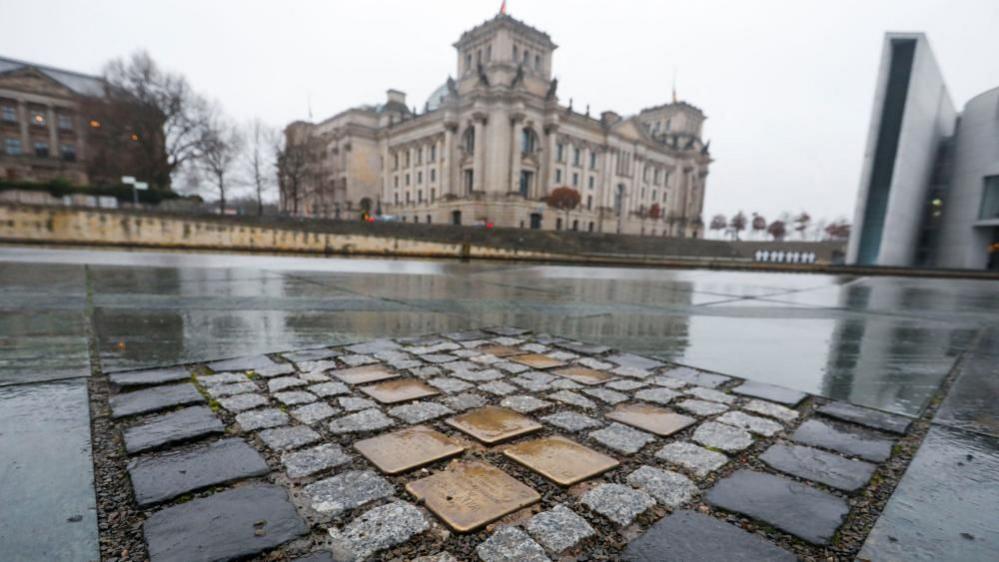

There has been a wave of criticism in Germany after the town of Heidenau, near Dresden in Saxony, decided to ban “stumbling stone” memorials to victims of the Nazis.
Germany's Education Minister Karin Prien called the ban a “scandal”, according to Bild.
Stolpersteine, the small brass plaques set into pavements to mark where Jews and other Holocaust victims once lived or worked, have become a common form of memorial in many European towns since the 1990s.
Heidenau’s council, backed by members of the Alternative für Deutschland (AfD) and the conservative CDU, voted to prohibit new stones, citing a perception that the plaques were “inappropriate” for the town.
The motion noted that future memorials should be placed at the city’s Nordfriedhof cemetery to keep them from “being stepped on directly”.
The decision has drawn sharp criticism from the CDU and Jewish community leaders. “Removing these memorials from public space is prioritising death over life and rendering Jewish people invisible once again,” said CDU member Karin Prien. Holocaust survivor and Munich Jewish community president Charlotte Knobloch described the ban as “completely the wrong approach”.
Knobloch emphasised that “decentralised remembrance” – memorials that are spread across the city – is essential for a genuine culture of remembrance. In Munich, the city allows plaques on public buildings but no Stolpersteine on municipal land.
Artist Gunter Demnig, who launched the Stolpersteine project, said the rise of the AfD and its electoral wins in Saxony and other eastern states made such a ban “to be expected”.
While parts of the AfD are classified by German intelligence as far‑right extremist, the party rejects the label and continues to promote a “Germany first” agenda that resonates with many in the former communist east.
The Heidenau case highlights a growing tension in Germany over how best to remember the Holocaust in public spaces, raising questions about who decides whether a memory should be visible in everyday streets.