In brief
A Danish‑run birth‑control programme in Greenland forced 4,500 Inuit women to receive intra‑uterine devices (IUDs) between 1966 and 1970 without consent, prompting a national debate about genocide. Two separate panels, one exonerating Denmark and the other acknowledging a “possible inference” of genocidal intent, produced conflicting conclusions. The government will continue to debate while Denmark offers compensation and an apology. The situation underscores lingering colonial tensions and the quest for Inuit self‑determination.
On Friday a split decision emerged from two panels tasked with reviewing the Danish‑led birth‑control programme that shocked Greenland’s Inuit women in the 1960s and 70s. The Maya‑derived IUD inserts, carried out by Copenhagen‑based doctors, were performed on some 4,500 Inuit women and girls, some as young as thirteen, often without any informed consent.
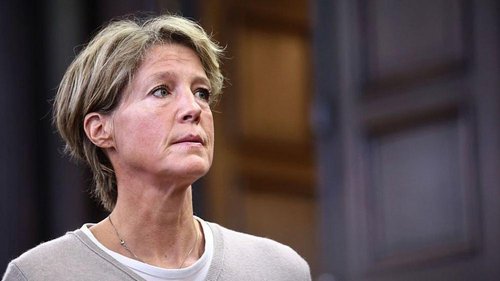
Justice Minister Marianne Paviasen summed up the government’s position: “We cannot say, on behalf of the government, whether there was genocide. This is something we can continue to debate.” The statement underscores the unsettled nature of the investigations.
Detective work into the allegations followed Denmark’s formal apology in August 2025 for the systematic discrimination inflicted on Greenlandic women. In 2024 former Prime Minister Mute B. Egede himself branded the policy a “genocide.” The UN Convention on the Prevention and Punishment of the Crime of Genocide, which Greenland is a party to, defines genocide as “imposing measures intended to prevent births” within a protected group.
The two panels produced opposing conclusions. The panel that remained, comprising Alaskan lawyer Dalee Sambo Dorough and University of Copenhagen law professor Miriam Cullen, found that the Inuit women’s rights were violated, but could not confirm genocide based on contraceptive practices alone. They noted that genocidal intent could still be “possible inference” if evidence from other areas, such as the removal of Inuit children to Danish families, is considered.
The dissenting report, written by former head of the Danish Institute for Human Rights, Jonas Christoffersen, and psychologist Jensine Nedergaard, also acknowledged the wrongs committed. However, they found no evidence that any authority or health professional had an intention “to destroy the Greenlandic population.”
Greenland’s prime minister Jens‑Frederik Nielsen announced the creation of a reconciliation commission to address this complex history, while Danish prime minister Mette Frederiksen pledged joint action: “We will handle the political process together with the government of Greenland. The most important thing for me is that we find the right path together.”
The compulsory IUD campaign was launched in 1966 to curb a rapidly growing population – from seven children per woman to an eventual rate of 2.3 by 1974. The programme only ran for eight years, after which fertility slowed further, contributing to the dramatic population decline that accompanied modernisation and improved healthcare.
Denmark has also enacted a compensation law that pays each affected woman 300,000 Danish crowns (about $46,800), signalling a financial acknowledgment of past abuses. Yet the compensation does not resolve the deeper legal and moral questions surrounding the possibility of genocide.
Victims are marketing their voices to ensure the conversation remains anchored in lived experience. Henriette Berthelsen told AFP that the absence of Inuit experts traited the reports as “skewed” from the start. She emphasized, “It’s my body, my life, my right to self‑determination.”
Inger Platou, 70, recounted waking from a minor operation to discover an IUD had been inserted without her knowledge. She called the treatment “like animals” and says the complications left her infertile, pushing her to adopt children from Colombia.
The debate stirs larger questions of post‑colonial justice. Greenland was a Danish colony until 1953 and only gained home rule in 1979, with Copenhagen running its healthcare system until 1992. The Inuit, who form 90 % of the island’s population, now contend with the legacy of forced medical intervention.
As the nation sifts through disparate expert analyses and international legal frameworks, the final verdict on genocide remains open. Continued dialogue, coupled with independent Inuit participation, is essential for determining the future path toward reconciliation.