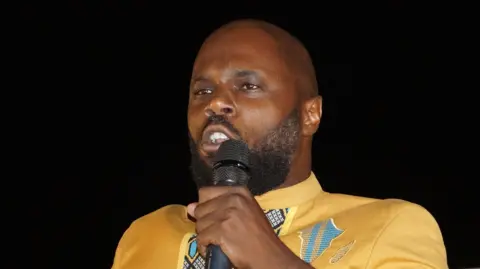
South African police have arrested Kemi Seba, a French-born Beninese activist and political figure, accused of attempting to flee to Europe through Zimbabwe. Seba, whose real name is Stellio Gilles Robert Capo Chichi, is wanted in Benin on charges of 'inciting rebellion' related to his support for a coup attempt last year.
Seba was apprehended along with his 18-year-old son during a sting operation at a shopping center in Pretoria. A facilitator who allegedly assisted them in attempting to cross illegally into Zimbabwe was also detained. According to South African authorities, Seba is considered a 'wanted fugitive' in both France and Benin for his alleged criminal activities against the state.
The police reported that the facilitator was paid approximately 250,000 South African rand (around $15,000) to help Seba and his son migrate across the Limpopo River to Zimbabwe with plans to continue to Europe.
Following their court appearance on Wednesday, both Seba and his son remain in police custody, with their next court hearing scheduled for April 20. The South African police have initiated extradition procedures for Seba.
Seba, 45, is known for his vocal opposition to French influence in Africa and his support for military leaders in West Africa. Previously in France, he has faced multiple convictions for inciting racial hatred and has been described as a proponent of Russian propaganda.
In 2024, he lost his French citizenship, responding dramatically by publicly burning his passport. He has since garnered a substantial following online, advocating for Pan-Africanism and the sovereignty of African nations.
The failed coup in Benin last December, which was quickly thwarted with help from Nigeria and France, was a significant event leading to his current legal troubles. Seba had publicly celebrated this attempted coup as a moment of 'liberation' for Benin, prompting the issuance of an international arrest warrant against him.
Seba's controversial activism continues to stir debate and scrutiny, especially as political dynamics in West Africa evolve and anti-French sentiments grow.
Seba was apprehended along with his 18-year-old son during a sting operation at a shopping center in Pretoria. A facilitator who allegedly assisted them in attempting to cross illegally into Zimbabwe was also detained. According to South African authorities, Seba is considered a 'wanted fugitive' in both France and Benin for his alleged criminal activities against the state.
The police reported that the facilitator was paid approximately 250,000 South African rand (around $15,000) to help Seba and his son migrate across the Limpopo River to Zimbabwe with plans to continue to Europe.
Following their court appearance on Wednesday, both Seba and his son remain in police custody, with their next court hearing scheduled for April 20. The South African police have initiated extradition procedures for Seba.
Seba, 45, is known for his vocal opposition to French influence in Africa and his support for military leaders in West Africa. Previously in France, he has faced multiple convictions for inciting racial hatred and has been described as a proponent of Russian propaganda.
In 2024, he lost his French citizenship, responding dramatically by publicly burning his passport. He has since garnered a substantial following online, advocating for Pan-Africanism and the sovereignty of African nations.
The failed coup in Benin last December, which was quickly thwarted with help from Nigeria and France, was a significant event leading to his current legal troubles. Seba had publicly celebrated this attempted coup as a moment of 'liberation' for Benin, prompting the issuance of an international arrest warrant against him.
Seba's controversial activism continues to stir debate and scrutiny, especially as political dynamics in West Africa evolve and anti-French sentiments grow.