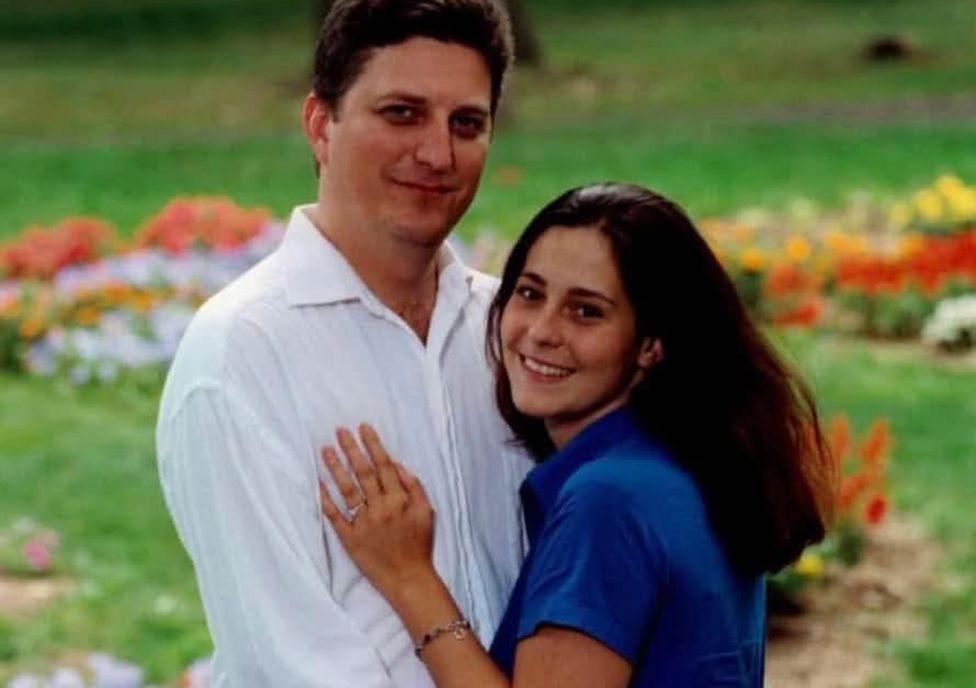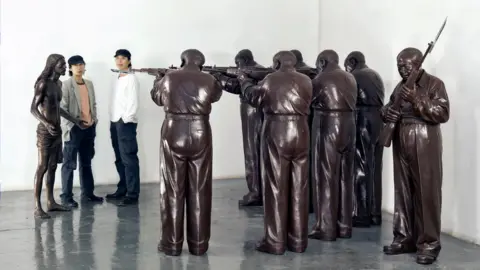
Chinese artist Gao Zhen stands at the center of a heated controversy following his arrest for works that challenge the legacy of Mao Zedong. His sculpture, 'Execution of Christ,' which depicts the figure of Jesus surrounded by riflemen resembling Mao, has drawn ire from authorities.
The Gao brothers, prominent figures in the Chinese art scene, have long used their art to critique the authoritarian regimes of their homeland. Despite their previous success without significant backlash, the recent escalation of censorship under President Xi Jinping has resulted in severe repercussions for dissenting voices.
Since his arrest in mid-2024, Gao Zhen has faced allegations of 'insulting revolutionary heroes,' carrying the potential for a three-year prison sentence. While Gao Qiang, his brother, highlights the broader implication of this case, warning of a chilling effect on freedom of expression in China, observers note that the Chinese government's crackdown appears to be retroactive and transnational.
The situation raises alarm among international rights groups, with calls for Gao's immediate release echoing from various advocacy organizations. Gao's health condition is reportedly deteriorating, complicating concerns about the state of affairs for artistic expression in China.
As censorship tightens and control extends beyond its borders, the Gao brothers' plight is emblematic of the precarious position that artists and dissidents find themselves in amidst a landscape where political expression is increasingly treated as a crime.