In brief
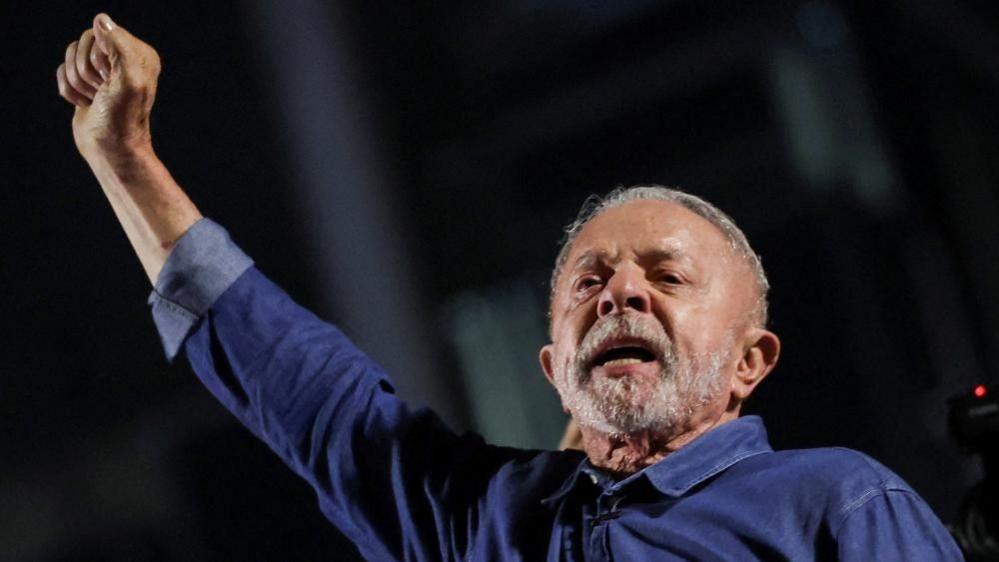
Luiz Inácio Lula da Silva is Brazil’s most famous politician, born into poverty and rising through trade‑union activism to win the presidency twice. He implemented sweeping social programs such as Bolsa Família to lift millions out of hunger, yet his first term was later shadowed by corruption charges that saw him imprisoned for 18 months. Returning to power in 2022, Lula fights to unite a divided nation while navigating complex relationships with the United States, China and Russia. His legacy is mixed – lauded for social progress and criticized for environmental and economic controversies.
Luiz Inácio Lula da Silva’s rise from a street‑sold peanut vendor to the executive of Brazil’s largest democracy is one of the most remarkable political stories of the early 21st century. Born in a poor family in São Paulo’s outskirts, he was still a ten‑year‑old when he learned to read and, by the 1960s, was a metalworker in the city’s factories. A factory accident left him with a missing left fingernail, a physical reminder of the harshness of industrial life that would later fuel his political drive.
A minor incident—in 1975, he was elected leader of the Metalworkers’ Union—opened the door to the political arena. Lula’s leadership turned the union into a potent, independent voice against a government that had long kept such bodies under state influence. In 1980 he helped found the Workers’ Party (PT), the first major left‑wing party in Brazil, moving the country’s politics away from military dominance toward a more inclusive, social‑democratic agenda.
The PT’s gradual transformation from an ideological collective to a pragmatic party set the stage for Lula’s first presidential victory in 2002. Once in office at the turn of the millennium, he accelerated a series of bold reforms: a sharp hike in the minimum wage, an ambitious network of health‑care and education projects, and the creation of Bolsa Família, a conditional cash‑transfer programme that lifted over 44 million people out of poverty and catapulted his popularity to record highs.
Lula’s governance ran from 2003 to 2010 and saw Brazil enjoy its longest uninterrupted streak of economic growth in three decades. The country also gained a stronger voice on the world stage, with Lula characterized abroad as a “saver of the Amazon” for his early protection of the rainforest—a stance that later faced scrutiny as his administration approved oil‑drilling licences near the Amazon’s mouth to boost revenues amid a global energy transition.
The ending of Lula’s first mandate was controversial. A sweeping corruption investigation—Operation Car Wash—led to his 2017 conviction for accepting a bribe. While publicly pleading innocence, political opponents called the trial a witch‑hunt aligned with political rival factions. In July 2017 the court sentenced him to 12 years, a term he served for only 18 months before a Supreme Court ruling invalidated his imprisonment as illegal. The case was annulled in 2021, restoring his eligibility to run for a third term.
Lula re‑entered the 2022 election cycle, standing as the PT’s sole candidate against a fragmented opposition dominated by far‑right figures. His campaign built upon a narrative of social justice tempered by a pragmatic foreign‑policy approach. He won a narrow victory in a runoff, becoming the first Brazilian to serve a non‑consecutive term and now facing the daunting task of uniting a country that remained deeply split over identity, policy and future direction.
His executive agenda continues to wrestle with pressing contradictions: the promise to phase out fossil fuels versus the need for oil revenue to finance development; environmental protection versus the economic boon of resource extraction; and a populist appeal to the poor while facing criticism from environmentalists on Amazon policy. Lula also must navigate a struggling alliance with global powers. Relations with the United States have been hit‑and‑miss, especially after a 2025 incident when President Trump imposed a 50 % tariff on Brazilian goods. Despite tensions, recent high‑level meetings at the White House, where the two leaders praised each other publicly, suggest a cautious détente.
On the international front, Lula uses Brazil’s participation in initiatives like BRICS to challenge the traditional dominance of the United Nations Security Council’s permanent members. He has openly defended ties with Russia and China, even as the world watches the geopolitical fallout from Russia’s conflict in Ukraine. By purchasing Russian oil, he seeks to maintain economic stability for Brazil while hinting at a broader multipolar world order.
The record of Lula’s leadership is marked by stark contrasts. Where his first term saw complete social mobility for millions, the second has been questioned by critics who point to an increase in inflation, uneven growth and a lack of long‑term economic planning. Yet he remains deeply popular among large segments of Brazil’s population, who view him as a symbol of hope and a champion of the marginalized.
As Lula turns 81, questions surrounding sustainability of his legacy loom large. Will his policies support Brazil’s transition to clean energy while protecting indigenous communities? Can he successfully steer Brazil through a decade of economic uncertainty and a worldwide shift toward green diplomacy? Only the next four years will reveal whether Lula can once again shape Brazil’s destiny while navigating a world that increasingly values coalition and cooperation over unilateral power.