
In brief
Kardo Jaf, known for smuggling migrants across the English Channel, was apprehended in Iraqi Kurdistan. Identified by a BBC investigation, Jaf's network is linked to thousands of illegal crossings. He allegedly operated under multiple aliases, complicating previous law enforcement efforts. The investigation into his activities reveals a vast smuggling enterprise that has been responsible for a significant portion of illegal migration to the UK.
A high-level people smuggler identified in a BBC investigation has been arrested in Iraqi Kurdistan.
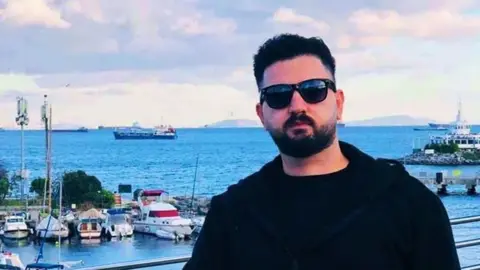
A network run by Kardo Jaf, who operates under the alias Kardo Ranya, is believed to have transported thousands of illegal migrants in small boats across the English Channel into the UK in recent years.
He was arrested on suspicion of human trafficking offences by officers of the Kurdistan Regional Security Agency and remains in custody as investigations continue.
The 28-year-old Iraqi Kurd had operated for several years under a number of aliases. By keeping his real name a closely guarded secret, Jaf made it more difficult for law enforcement agencies to issue an international arrest warrant.
His real name was uncovered last week by the BBC's Sue Mitchell and Rob Lawrie, whose pursuit of the smuggler is told in the Radio 4 podcast Intrigue: To Catch A King.
Confronted by the BBC with the allegations, Jaf denied being a smuggler and said he had only ever advised people on how to leave Iraq. He also said he did not believe he had committed any offence.
Jaf is suspected of being a key player in an Iraqi Kurdish network that has controlled the majority of illegal cross-Channel journeys in recent years.
He has mainly been known - both to migrants and fellow smugglers - by the pseudonym Kardo Ranya. The surname was taken from the town in Iraqi Kurdistan he and the other leaders of the network were from.
This is a powerful network that all comes back to Ranya, the Kurdish MP Dr Muthana Nader told the BBC. He added that he believed 70% of illegal migration to the UK was being controlled from the town.
As documented in the podcast, Jaf promoted his services on social media, offering a people-smuggling service that covered the distance stretching from Afghanistan to the UK.
His adverts featured glamorous images of London and testimonies from apparently satisfied customers.
He also provided a choice of routes and modes of transport, depending on how much migrants can afford.
Speaking to a BBC translator who pretended to be an interested would-be customer, Jaf quoted a price of £160,000 to bring a whole family to the UK on a VIP flight service to Manchester.
However, the BBC also heard stories from some of Jaf's less-well-off passengers who described being shunted onto dangerously overpacked boats late at night and left to steer themselves across the English Channel.
The UK's National Crime Agency announced on Tuesday that a suspected people smuggler had been arrested on 13 May, without naming Jaf.
Its Director General of Operations Rob Jones said the case was a potentially very significant arrest of an individual who has been under active investigation by numerous law enforcement agencies because of his links to people smuggling.
Jones said there should not be an assumption that individuals like those featured in (the BBC's) documentary are out of our reach.
He added the NCA currently has more than 100 investigations ongoing into networks or individuals in the top tier of organised immigration crime, including those based in locations across the Middle East and Africa where they might previously have thought they could operate with impunity.
Small-boat crossings have become the most common way for people to be detected entering the UK illegally since 2020.
Nearly all those arriving this way claim asylum - saying they cannot live safely in their own country because of persecution or violence.
Under international law, this means they are allowed to stay in the country while their asylum application is considered.
Almost all those making the journey across the Channel are aged under 40. Men and boys made up nearly nine in 10 small boat arrivals between 2018 and 2025.


