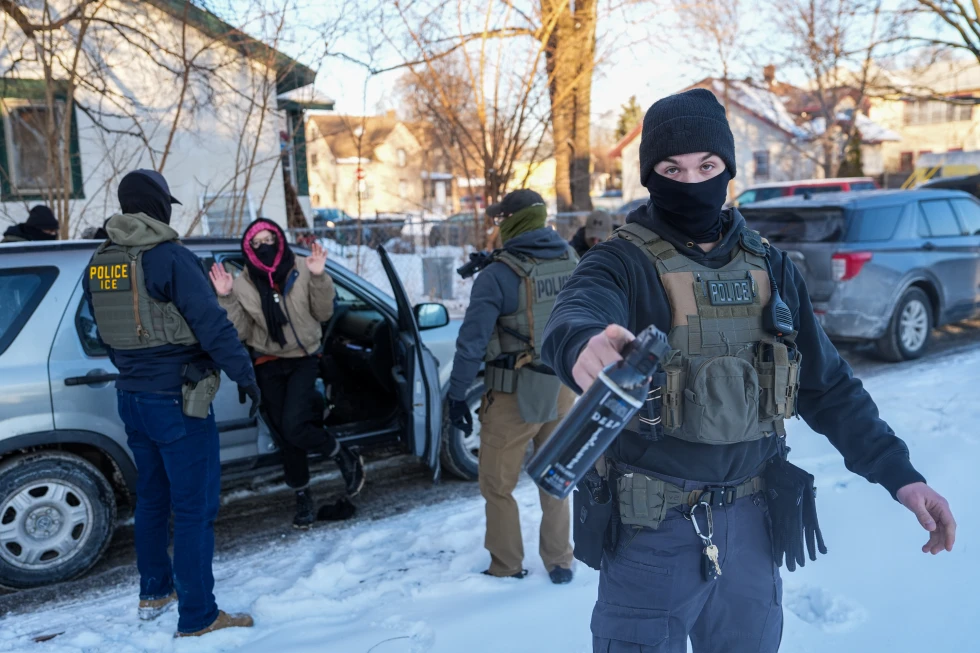
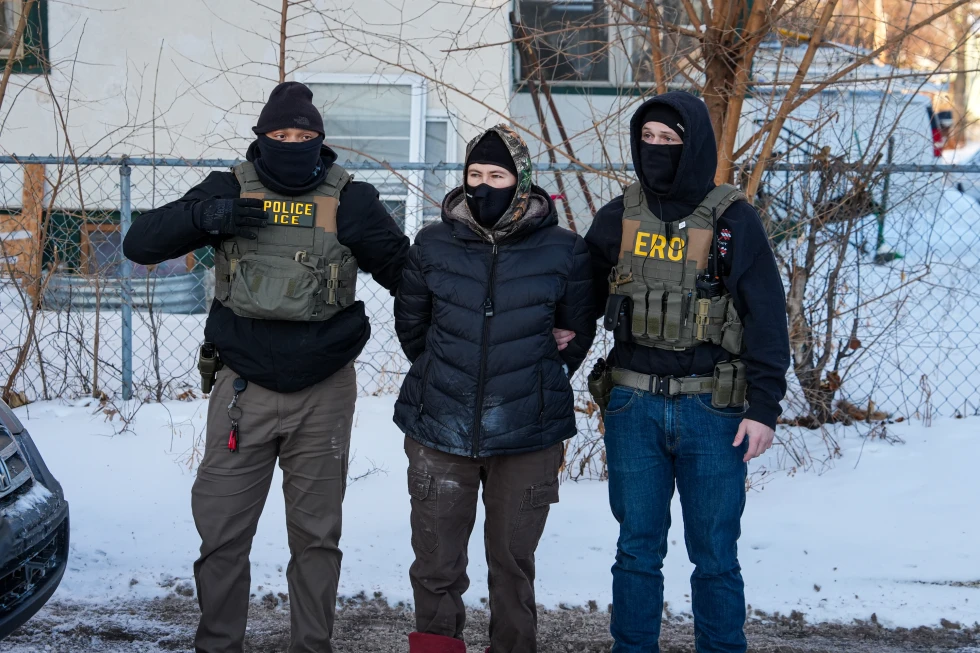
MINNEAPOLIS (AP) — A Minneapolis man, Kyle Wagner, aged 37, has been arrested on charges of cyberstalking and threatening to assault Immigration and Customs Enforcement (ICE) officers involved in the enforcement operations across Minnesota.
According to federal prosecutors, Wagner's threats included calls to 'forcibly confront, assault, impede, oppose, and resist' federal officers, whom he described using derogatory terms. The formal charges were filed and announced on Thursday, and a decision regarding a possible indictment is expected soon.
Wagner's involvement with antifa was noted in the allegations, with prosecutors claiming he incited violence during his online engagements. President Trump had previously stated his intention to designate antifa as a terrorist organization due to its militant actions against fascist groups.
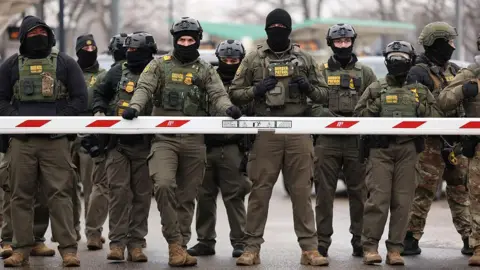
On September 2nd, Homeland Security indicated it would withdraw about 700 federal officers from Minnesota following a period of escalated protests against ICE operations. This came in response to increasing local tensions and calls for officers to depersonalize their interactions with communities.
In a series of concerning posts on social media platforms, Wagner allegedly advocated for physical confrontations with ICE officers, describing them as the 'gestapo.' Additionally, he is accused of doxxing a pro-ICE individual, publicly sharing sensitive information that put them and their family at risk.
The legal proceedings surrounding Wagner are significant, especially as they arise during a time of rising critiques against ICE practices and their operations across various states. Federal officials have not yet disclosed reasons for initiating the case in Michigan, despite its connections to Minnesota.
The challenges within the U.S. Attorney's office in Minnesota were exemplified by reports of multiple resignations amid frustrations stemming from increased immigration case loads. Officials noted their current reactive status in processing cases and handling court demands.
As the case continues to unfold, it draws attention not only to the actions of Wagner but to the broader implications of federal enforcement movements and community resistance.