A scheme to encourage climbers to bring their waste down from Mount Everest is being scrapped - with Nepalese authorities telling the BBC it has been a failure.
Climbers had been required to pay a deposit of $4,000 (£2964), which they would only get back if they brought at least 8kg (18lbs) of waste back down with them.
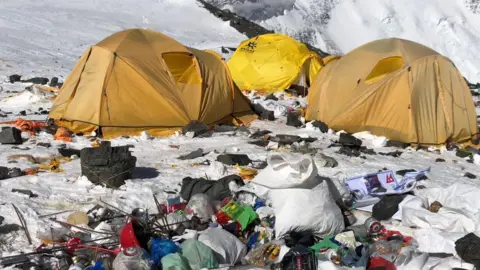
It was hoped it would begin to tackle the rubbish problem on the world's highest peak, which is estimated to be covered in some 50 tonnes of waste.
But after 11 years - and with the rubbish still piling up - the scheme is being shelved because it failed to show a tangible result.
Himal Gautam, director at the tourism department, told the BBC that not only had the garbage issue not gone away, but the deposit scheme itself had become an administrative burden.
Tourism ministry and mountaineering department officials told the BBC most of the deposit money had been refunded over the years - which should mean most climbers brought back their trash.
But the scheme is said to have failed because the rubbish climbers have brought back is usually from lower camps - not the higher camps where the garbage problem is worst.
From higher camps, people tend to bring back oxygen bottles only, said Tshering Sherpa, chief executive officer of the Sagarmatha Pollution Control Committee, which runs an Everest checkpoint.
Other things like tents and cans and boxes of packed foods and drinks are mostly left behind there, that is why we can see so much of waste piling up.
Mr. Sherpa said on average a climber produces up to 12kg (26lbs) of waste on the mountain, where they spend up to six weeks for acclimatization and climbing.
Apart from the flawed rule that required climbers to bring back less trash than they produce, authorities in the Everest region said lack of monitoring has been the main challenge.
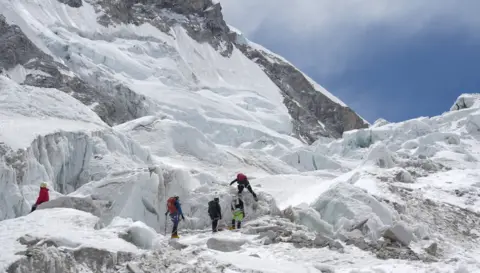
Apart from the checkpoint above the Khumbu Icefall, there is no monitoring of what climbers are doing, added Mr. Sherpa.
Nepalese authorities are hoping a new scheme will be more effective.
Under the changed rule, officials said, a non-refundable clean-up fee from climbers will be used to set up a checkpoint at Camp Two and also deploy mountain rangers to monitor compliance.
Tourism ministry officials said it will most probably be $4,000 per climber - the same amount as deposit money - and will come into effect once passed by parliament.
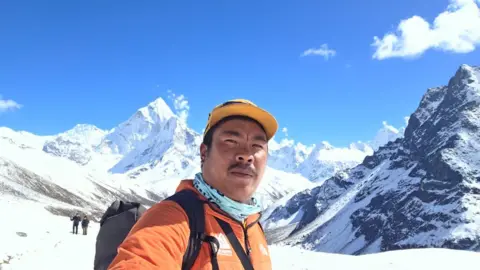
Mingma Sherpa, chairperson of the Pasang Lhamu rural municipality, stated that the change was something the Sherpa community had lobbied for for many years.
We had been questioning the effectiveness of the deposit scheme all this time because we are not aware of anyone who was penalized for not bringing their trash down. There was no designated fund, but now this non-refundable fee will create a fund that can enable us to perform clean-up and monitoring works.
The non-refundable fee will form part of a recently introduced five-year mountain clean-up action plan, with Jaynarayan Acarya, spokesperson at the ministry of tourism, asserting that it is designed to immediately address the pressing problem of waste on our mountains.
Although no study quantifying the waste on Everest has been conducted, it is estimated that tons of waste remain, including human excrement that does not decay at higher altitudes due to freezing temperatures.
The increasing number of climbers each year, averaging around 400 with many more support staff, raises concerns for sustainable mountaineering.