In brief
President Trump has voiced ambitions to secure Greenland's rare earth resources as a strategy to counter Chinese and Russian influence. However, the island's extreme climate and lack of infrastructure pose significant challenges for mining development. Industry experts argue that such a focus may be more about geopolitical posturing than a viable solution to America's rare earth supply issues, as practical mining operations remain distant.
Greenland's harsh environment and inadequate infrastructure have left efforts to develop its rich deposits of rare earth elements in limbo. These elements are crucial for many high-tech applications, but as President Trump pushes for gaining control of this Arctic territory, industry experts highlight that significant barriers remain.
Trump's administration has long been focused on breaking China's dominance in the global supply of rare earths, particularly after extensive tariffs were imposed last year, leading China to restrict sales. Investment efforts by the administration, amounting to hundreds of millions of dollars, intend to promote companies in the sector, yet experts urge caution regarding Greenland's viability.
The president's determination was evident when he declared, We are going to do something on Greenland whether they like it or not. However, experts remain skeptical about the reality of mining in Greenland. Current exploratory projects, spearheaded by various companies, have made little progress and still face formidable challenges ahead.
As highlighted by Tracy Hughes, founder of the Critical Minerals Institute, the fixation on Greenland seems to be driven by geopolitical interests rather than practical solutions for extracting rare earths needed in technology sectors. He stated, The hype far outstrips the hard science and economics behind these critical minerals. More than just mining, the focus on Greenland appears to serve as a counter to Russian and Chinese influence in the Arctic region, according to Hughes.
Trump's concerns about other nations' encroachments were echoed in his remarks at the White House: We don’t want Russia or China going to Greenland, which if we don’t take Greenland, you can have Russia or China as your next door neighbor. That’s not going to happen. His statements emphasized a broader strategy that some analysts interpret as a military and geopolitical maneuver rather than simply an effort for mineral extraction.
The Realities of Greenland Mining
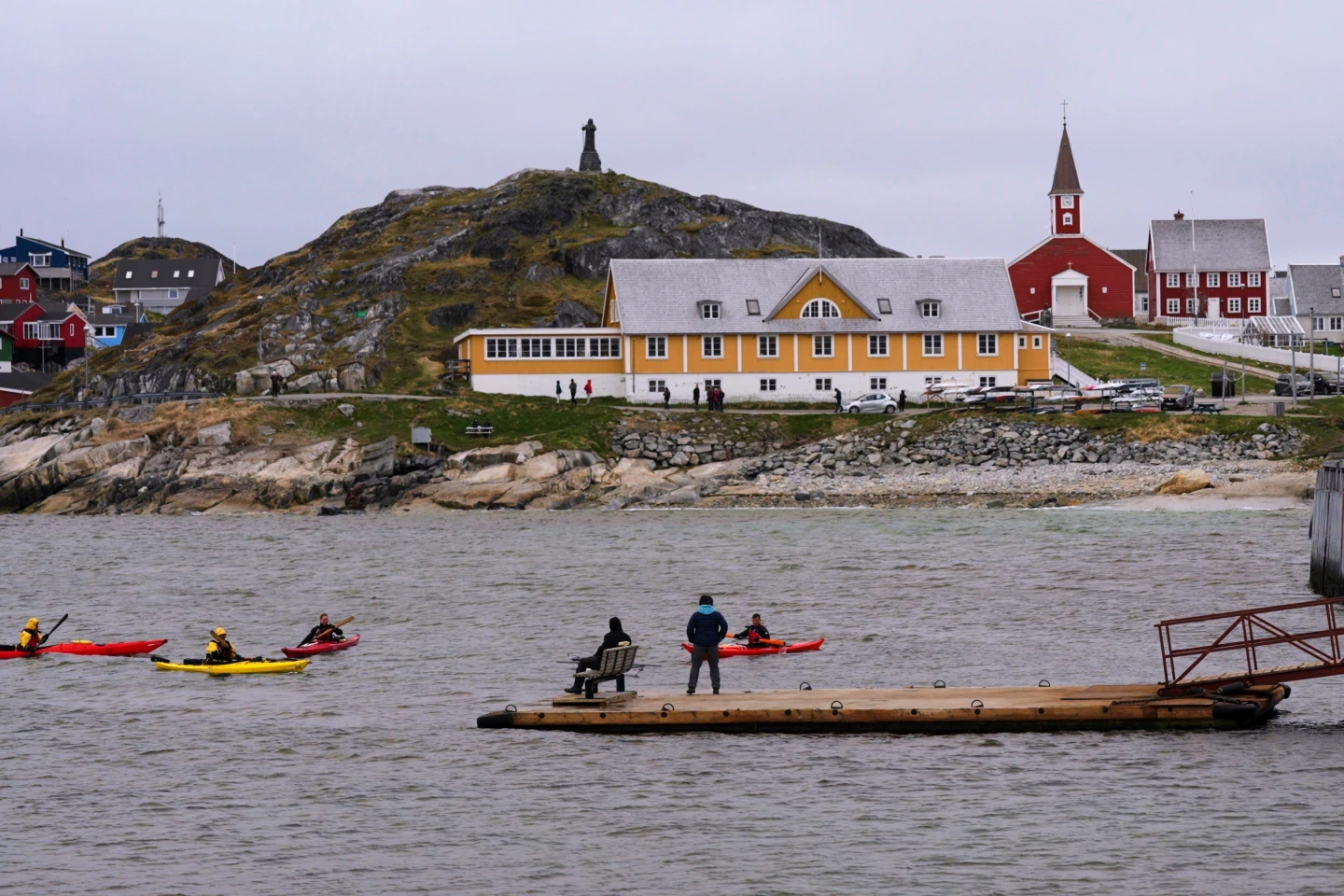
Mining opportunities in Greenland are complicated by its remote location, lack of accessible roads, and lack of basic infrastructure. Most potential mining operations would not only require a large financial investment to establish necessary logistics and operations but also risk environmental degradation in an already fragile ecological system.
“The remoteness is a major factor, as any mining effort will have to build extensive access routes. Electricity generation in the area is another necessity,” noted Diogo Rosa, an economic geology researcher. With Greenland's commitment to tourism, the environmental impact of mining raises ethical concerns about larger developments.
Current deposits of rare earth elements in Greenland are embedded in complex geological formations, often connected with toxic materials or even radioactive elements. The extraction methods suitable for these deposits have yet to be proven economically viable, an issue that poses a significant obstacle for companies attempting to turn exploratory projects into profitable operations.
While a few companies are eager to move forward, discussions surrounding developing mines in Greenland again spotlight the long-standing challenges of rare earth mining globally. The U.S. faces not only geographic and financial limitations in developing Greenland's resources but also stiff competition from established producers, particularly in China, where processing takes place for much of the world's rare earth output.
Overall, while Trump's push for energy independence and resource control may hold some allure, experts advise refocusing efforts on existing mining ventures elsewhere, as these could yield results more swiftly compared to the uncertain future of Greenland's resource extraction endeavors.
---
This article examines the complex challenges that lie ahead as Trump proposes pursuing Greenland's rare earth resources amid growing international competition.