In brief
Dmitry Muratov, 2021 Nobel Peace Prize laureate, confronts President Vladimir Putin about the ongoing war in Ukraine, insisting the conflict cannot be called a victory. He recounts the nationalisation of Novaya Gazeta’s printing presses, the revocation of its registration, and the blocking of its website, highlighting the broader erosion of free speech in Russia. Muratov details the numbers of political prisoners and the harsh labels applied to critics, including his own designation as a "foreign agent," while urging international attention to Russia’s jailed journalists and civilians. The former editor stresses that the war has raised human rights concerns far beyond the battlefield and warns that the situation could still deteriorate further if left unchecked.
Dmitry Muratov, Nobel Peace Prize laureate, says Putin can no longer claim victory in Ukraine
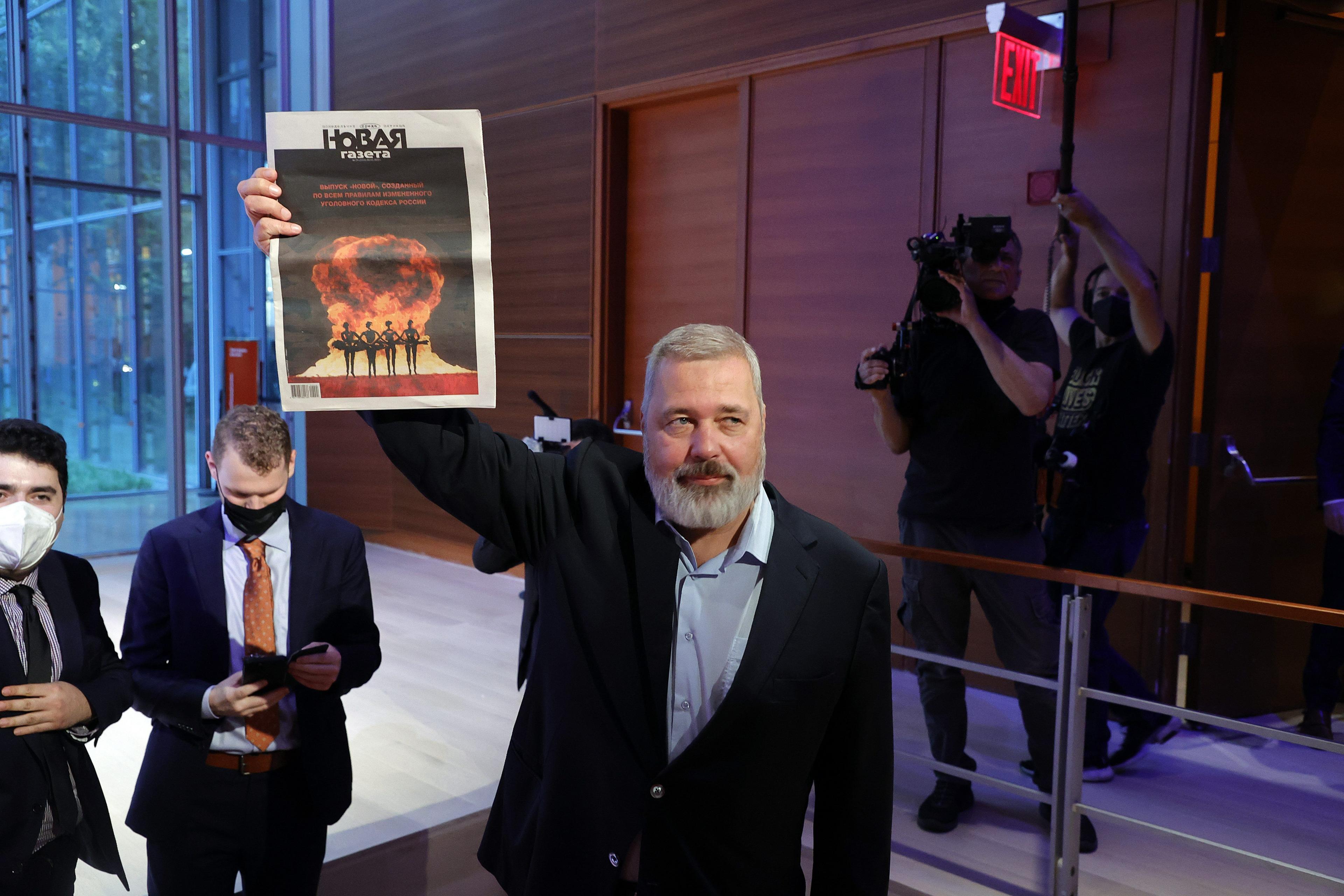
In an exclusive interview at the quiet offices of Novaya Gazeta in Moscow, Dmitry Muratov recounts the paper’s decline and the state’s tightening grip on independent journalism.
"There is no newspaper anymore," Muratov says, describing the corridors as silent. The former editor, who co‑founded the outlet over 30 years ago, reflects on the paper’s role in exposing corruption and human rights abuses, and the tragic killing of six of its journalists, including Anna Politkovskaya.
In 2021 Maryov was awarded the Nobel Peace Prize for "safeguarding freedom of expression". The award did not shield him from the Kremlin’s crackdown. In 2022, the government nationalised the printing presses, revoked Novaya Gazeta’s registration and blocked its website, forcing readers to rely on VPNs or foreign servers.
Muratov notes that since Russia’s "special military operation" in Ukraine the number of people imprisoned for speaking out has exploded to at least 1,500, a figure he describes as three times higher than the Soviet era.
The Nobel laureate criticises Putin’s claim of victory, insisting that the war can be "destroyed" but never conquered. He cites the use of drones against Russian logistics, the petrol crisis, and widespread political persecution as evidence that security has not increased.
“When the press is shut, when editors are labelled as foreign agents, the state creates an environment of fear,” Muratov says, explaining how the label limits rights in education, elections, and property sales.
He draws attention to the plight of political prisoners: journalists Antonina Favorskaya, Konstantin Gabov, Sergey Karelin and Artyom Kriger have been jailed for extremism, while others like the pianist Pavel Kushnir died in custody. The image of these faces underscores the risk to those who speak out.
Despite the bleak circumstances, Muratov offers a glimpse of hope. He reports that ordinary citizens in Moscow still express gratitude for the newspaper’s reporting, even if in whispers, showing that silence is not absolute.
Muratov's warnings are meant for the world: the conflict in Ukraine is no longer a fleeting engagement but a devastating humanitarian crisis, and Russia’s suppression of dissent continues to grow.