In brief
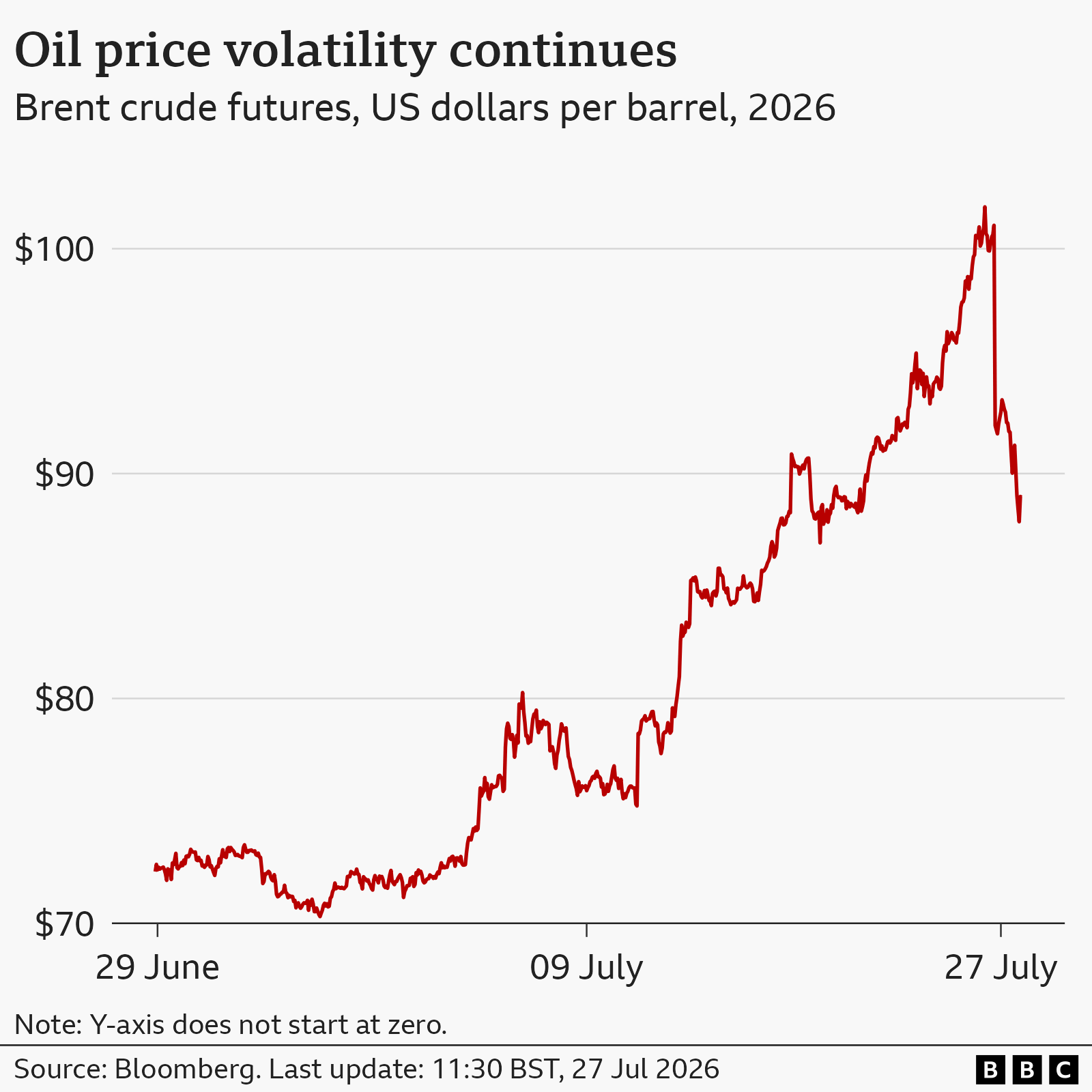
A pause in hostilities between the United States and Iran has sent Brent crude prices down more than 9% to $87.59 a barrel, after a recent rise that pushed oil above $100. The halt of retaliatory attacks has sparked hopes of de‑escalation, but analysts warn of lingering volatility given the still‑conflicted dynamics of the region. While oil takes a breather, European gas inventories edge closer to scrutiny, and central banks are poised to act on rising inflation pressures.
A pause in retaliatory strikes between the United States and Iran has pushed global oil prices sharply lower.
Brent crude was at $87.59 a barrel at 11:30 BST after a 9% plunge from the $100 level it reached the previous week. The decline followed the United Nations ambassador’s statement that U.S. forces had halted attacks on Iran for two consecutive nights to give negotiations “some space”. An Iranian army spokesperson confirmed that Tehran had stopped retaliatory strikes.
The initial flare‑up of the conflict had closed the Strait of Hormuz, the key maritime corridor that transports about 20% of the world’s oil and LNG, driving prices to a pre‑war slump of around $70. Recent tensions, however, have reignited fears of a new supply bottleneck.
Oil markets remain cautious. Susannah Streeter, chief investment strategist at Wealth Club, notes uncertainty over whether the ceasefire will lead to lasting peace. Rising wholesale gas prices and the risk of low European gas inventories are adding price pressure, according to Wood McKenzie’s latest analysis.
In turn, higher fuel costs are raising inflation risks—an issue that prompted the European Central Bank to raise interest rates in June. Central banks in Britain and elsewhere are now forecasting rate hikes later in the year instead of the cuts once anticipated.