In brief
Senior Gen. Min Aung Hlaing, head of Myanmar's military junta, has been accused of crimes against humanity by the International Criminal Court, as officials vow to hold him and others accountable for the atrocities committed against the Rohingya population.
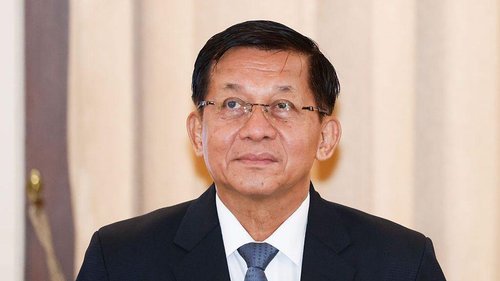
Senior Gen. Min Aung Hlaing, the leader of Myanmar’s military junta, is at the center of international scrutiny following allegations of crimes against humanity made by the International Criminal Court (ICC). Prosecutor Karim Khan announced on Wednesday the intent to issue an arrest warrant for Hlaing, citing his leadership role during the 2017 military campaign against the country's Muslim Rohingya minority that resulted in numerous atrocities—including civilian deaths, sexual violence, and widespread destruction of homes.The ongoing violence has displaced over a million Rohingya, many of whom now reside in refugee camps in Bangladesh. Khan indicated that further arrest warrants targeting additional military officers in Myanmar may be forthcoming, amplifying the pressure on the military government.General Hlaing’s rule has been marked by severe repression since he led a military coup in February 2021 that dismantled the democratically elected government. He assumed multiple civilian titles alongside his military rank, further consolidating power. Under his regime, the situation in Myanmar has dramatically deteriorated, with reports estimating more than 5,000 civilian deaths and displacing over three million individuals. The country is now facing alarming poverty levels, with over half the population impacted.The junta’s harsh tactics extend to political dissent, as pro-democracy activists face violent crackdowns and imprisonment. One of the most prominent victims is former civilian leader Daw Aung San Suu Kyi, who was sentenced to years of imprisonment under controversial charges condemned by international observers as politically motivated.Data from the Assistance Association for Political Prisoners (Burma) indicates that since the coup, approximately 27,700 people have been detained, with over 21,000 currently imprisoned. Disturbingly, at least 260 individuals are reported to have died due to torture while in custody, although the true figures may be significantly higher.Before his rise to power, Min Aung Hlaing had a long military career, having graduated from the Defense Services Academy in 1977. He garnered a reputation for aggressive tactics against various ethnic groups and has been commander in chief since 2011—a role that places him outside the purview of any civilian oversight. The U.S. government had previously imposed travel bans on him and other officials in 2019, citing their involvement in widespread human rights violations.As the international community watches closely, the accountability of Hlaing and his administration remains uncertain, with calls for justice growing louder against a backdrop of ongoing violence and repression in Myanmar.