In brief
Oh Seung-geol, the chief administrator of South Korea's Suneung exam, has resigned following criticism of the English portion's extreme difficulty. The exam, which plays a critical role in determining students' futures, included challenging questions, leading many to express frustrations over the wording and content. This incident highlights ongoing debates about the true objectives of the examination system within South Korea's rigorous education landscape.
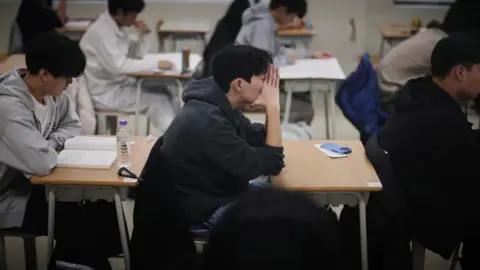
The English section of South Korea's gruelling college entrance exam, or Suneung, is notoriously difficult, with some students comparing it to deciphering an ancient script, and others calling it insane.
So intense was the criticism around this year's test that the top official in charge of administering it resigned to take responsibility for the chaos it caused.
Korean education chief Oh Seung-geol stated, We sincerely accept the criticism that the difficulty of questions... was inappropriate, acknowledging the test fell short despite having undergone several rounds of scrutiny.
Among the most daunting questions were those referencing philosophical concepts and gaming jargon, demonstrating the eclectic and challenging nature of the material tested.
Many students expressed frustration, with only 3% achieving the highest grade in the English section this year, a decline from 6% last year. This decline reflects not just the test's difficulty, but possibly flaws in its design and execution.
Critics described the exam questions as poorly worded and confusing, detracting from the educational process. An English professor argued that test preparation overshadowed effective language education, turning students into mere participants in a test-taking ritual rather than fostering genuine learning.
Despite the uproar, some argue that the difficulty is necessary to gauge academic readiness for university-level studies, raising questions about the direction of South Korea's educational policies and their impact on students' futures.
The Suneung is not only a significant event for students but for the nation, affecting daily life across South Korea, with various public and private sectors adjusting to accommodate test-takers.
Oh’s resignation marks a rare occurrence, as previous exam chiefs have faced backlash for errors rather than test content, reflecting the rising tensions around educational stresses in South Korea.