In brief
After Ayatollah Ali Khamenei’s death, Tehran’s streets became a stage for mourning, politics and protest. The 10km funeral route, stopped by millions of crowds, was punctuated by slogans calling for revenge and “death to America” and Israel. While a minority fled the city, many stayed to witness prayer, speeches, and a heavily choreographed procession that highlighted Iran’s post‑war resilience. As the burial rites moved to sacred Shia locations, the narrative of the revolution’s legacy was both celebrated and challenged by voices inside and outside the holy sites. Amid economic crisis and a fragile war situation, the spectacle served as a double‑edged signal of triumph and a warning to U.S. President Trump and the international community.
Three days of mourning in Tehran turned into a powerful political overture as flowers, chants, and military symbols were laid in the public square.
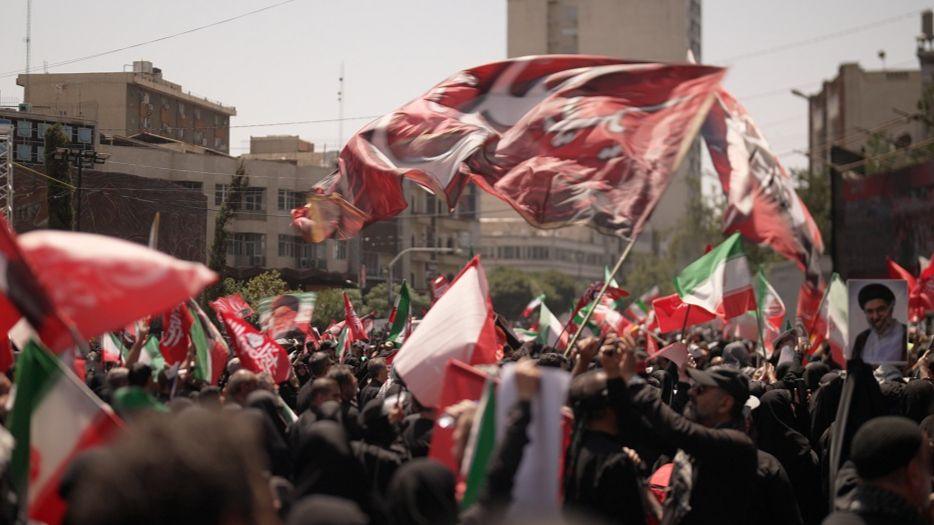
The funeral cortege, with five coffins stitched in the Iranian flag colors, moved a 10km route that hungered for calm yet halted at an impasse of a million mourners. Each pause became a spectacle: slogans of “death to America” and “death to Israel” were shouted, and a massive steel‑clad car belted out chants of vengeance.
Despite two wars, high inflation, and recent anti‑government protests, many Iranians stayed to observe the formal rites. Meanwhile, a segment of the populace remained absent, blaming the death on Khamenei’s security crackdown and the wars that paralyzed the nation.
At one pre‑arranged “mookeb” stop, volunteers fed mourners free water and food. Over 400 foreign journalists were invited to cover the events – a rare window into Iran’s high‑volume state propaganda.
A pivotal moment was the influx of symbolic messaging. Instagram, Telegram and state‑owned apps spread slogans such as “Our revenge is inevitable” and “They will pay – hard.” The visuals were amplified by red tattered flags worn by grieving crowds.
Outside the city, a grey‑haired man named Mojtaba met the reporter. He claimed to have a message for President Trump and promised imminent retribution: “Soon the white house will paint the color of my red flag.” The troubling sentiment was mirrored by a government official who acknowledged the deep anger among hard‑liners, especially on the perceived betrayal of the new U.S. deal.
After the ceremony ended, the procession moved to Qom, Najaf and Karbala – holy sites that further amplified the iron‑clad message of resilience and dominance. The final burial took place in Mashhad’s Imam Reza Shrine, marking the last burials of Iran’s first‑generation revolution leaders.
Media accounts detail how the coffins of Khamenei and his family were carried on a truck adorned with geometric lattice and Islamic script, a symbol of the inherent sanctity and power of the leadership.
The spectacle – a gigantic clenched fist statue over the Enqelab Square – was staged to convey that the Iranian regime is unbroken and its enemies will not prevail.
Across Tehran, the energy was defiant, yet the future is still ambiguous. The new Supreme Leader, now 56, has yet to meet the world after the airstrikes that severely injured him.