In brief
When a mutiny seized the military base in Niamey, Niger’s junta called on Russia’s Africa Corps, a unit directly under the Russian defence ministry, to keep the government in power. The intervention—not just an act of counter‑insurgency—underscores a shift: Russian forces now serve more to protect regimes than to fight jihadists. Analysts argue this pivot is driven by Russia’s strategic desire to keep allies that control mineral resources and to counter Western influence. Yet, the Sahel’s security crisis remains unresolved, and Niger’s troops complain of equipment shortages. The mutiny’s aftermath highlights a growing dependence on Moscow and questions about the long‑term durability of these alliances.
Russia’s Sahel Deal: Protecting Regimes Outweighs Fighting Jihad
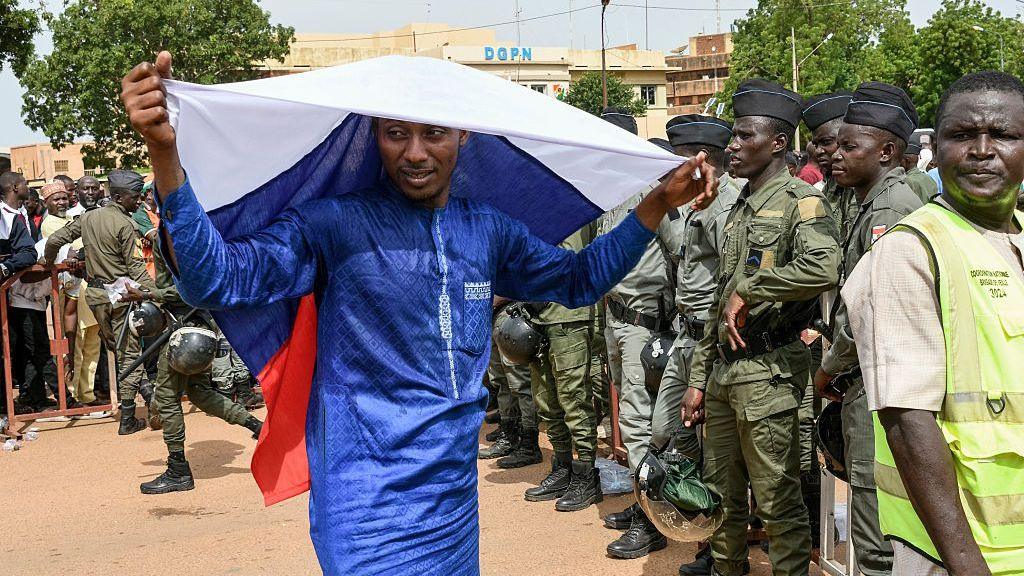
After mutinous soldiers seized a strategic base in the Niger capital, Niamey, the ruling junta turned to Russia for help. Russia’s Africa Corps—directly overseen by Moscow’s defence ministry—arrived overnight, enabling government forces to reclaim Air Base 101 at Diori Hamani International Airport.
Unlike the earlier Wagner mercenary group, Africa Corps is a governmental asset tied directly to the Russian ministry of defence. Analysts estimate 200‑300 Russian troops operate in Niger and have been active in both the July 2023 coup and the June 2024 mutiny.
Simi Jolaoso, BBC Africa correspondent, reported that Russia’s ambassador publicly acknowledged the weekend intervention, framing it as a "repression of a mutiny." The action is seen as a symbolic victory that consolidates Russia’s influence, “putting them at the centre of the counter‑insurgency campaign, but also in the protection and prolongation of military rule,” according to senior analyst Beverly Ochieng.
Following the mutiny, the Niger government’s claims of deteriorating security and Western partners’ weak support now find backing in Russia’s actions. Yet, seven years of jihadist attacks continue unabated, with al‑Qaeda and Islamic State affiliates active in Tillabéri and Dosso.
The mutiny has spotlighted internal grievances among Niger’s soldiers, who say counter‑insurgency units lack adequate equipment. The Africa Corps’ tactical intervention may keep the military junta afloat, but it does not address the root insurgency problem.
Analysts note that Russia’s involvement has expanded beyond mere combat assistance. The continent’s mineral wealth—gold in Mali, uranium in Niger—has become a cornerstone of Russia’s interest. With the Sahel governments slashing French troops and forming the Alliance of Sahel States, Russia’s presence, despite its doctrinal shift, continues to be seen as a safeguard for these regimes in international forums.
In a tug‑of‑war over narrative, many Sahel states inflate Russia’s role while re‑pressuring the idea that they genuinely control military affairs. Still, the core reality is a complex partnership understood by the military governments as one that respects sovereignty and provides a strategic counterbalance to former colonial powers.
While Russia’s war with Ukraine consumes its military resources, the Sahel still offers a strategic niche where Russia can maintain a reliable ally with minimal resource commitment, focusing on defense and supply operations.
This intervention demonstrates the limits of Russia’s support: it can protect a regime or defend a capital, but cannot secure widespread territory from insurgent threat. The Sierra region’s security crisis remains in play, and future mutinies may be hindered only insofar as Russia continues to provide that defensive posture.