In brief
The Supreme Court's 5‑4 decision clears the way for President Donald Trump to keep construction of a 90,000 square‑foot ballroom at the White House underway, a win for the White House’s executive renovations. Chief Justice John Roberts dissented, arguing that the building is likely unlawful without congressional approval, while the National Trust for Historic Preservation lost its legal challenge. Trump’s administration has claimed the project is necessary for larger events and security following an alleged attack, while preservationists fear irreversible damage to a historic landmark. The ruling leaves the dispute over the ballroom’s legality to be debated under stricter legal scrutiny.
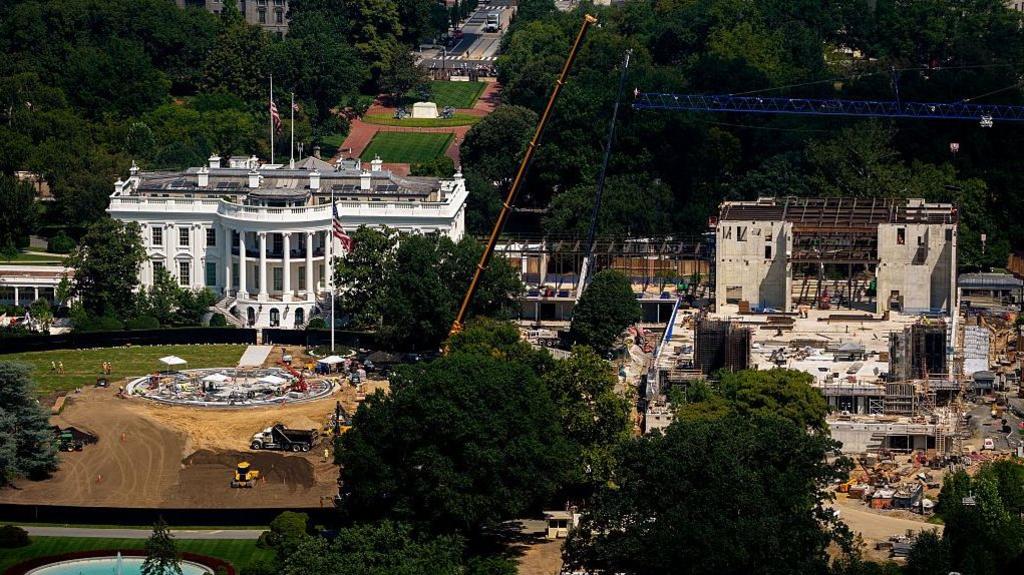
In a 5‑4 judgment, the U.S. Supreme Court granted the Trump administration’s emergency request to keep building a $400 million, 90,000‑square‑foot ballroom on the East Wing of the White House, despite lower courts’ injunctions.
Chief Justice John Roberts, a conservative, sided with the three liberal justices to dissent, writing: “Construction is likely unlawful because Congress has not approved the project.” The National Trust for Historic Preservation, which had sued on behalf of historic preservationists, argued the president lacked unilateral authority to proceed.
Trump demolished the historic East Wing last autumn to make way for the ballroom. The White House said the project will be “substantially” finished by November and fully completed by August 2028, and the construction also includes a new helipad on the South Lawn.
The ruling did not decide the legality of the East Wing project but held that the preservation group lacks standing to sue the government. The majority argued the lower courts had likely exceeded their authority in blocking construction. “The elimination of the stay means the project can continue,” the court noted.
Chief Justice Roberts said the decision was “no victory for the separation of powers” and highlighted the need for congressional approval for such significant changes to a national monument.
Trump celebrated the outcome, posting on social media that the lawsuit was “baseless” and expressing confidence that the ballroom would be one of the greatest structures in Washington, D.C. He cited the need for larger events and security following an alleged assassination attempt at the Correspondents’ Association dinner.
The National Trust for Historic Preservation welcomed the dissenting opinion, calling the project an irreversible damage to a historical landmark. It also reminded that each president is a temporary steward of the People’s House and does not have unilateral authority to remodel without congressional approval.
Beyond the ballroom, the Trump administration’s vision for Washington includes a new helipad, renovations to the Lincoln Memorial Reflecting Pool and a proposed “Arc de Trump” larger than Paris’s Arc de Triomphe.