In brief
Time Magazine has named the collective 'architects of AI' as its Person of the Year for 2025, featuring leaders like Jensen Huang and Mark Zuckerberg on two distinct covers. The recognition underscores the transformative role of AI in society and the increasing investments from tech giants to dominate this sector. This marks a pivotal moment in the integration of AI into everyday life, as consumers often engage with the technology unknowingly.
Time Magazine's Person of the Year for 2025 is not a single person.
Instead, the magazine has recognised the year's most influential figure as the architects of artificial intelligence (AI).
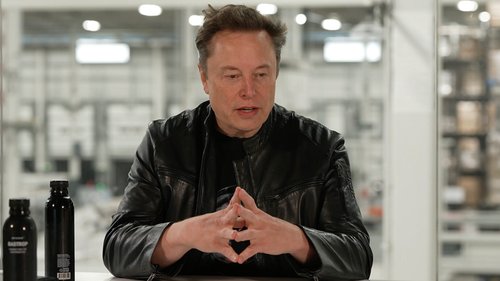
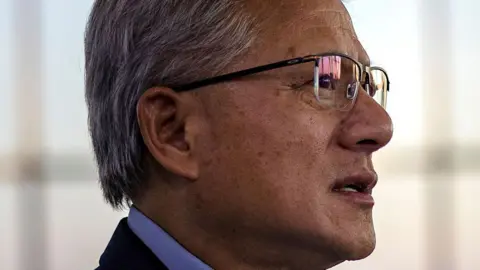
Nvidia boss Jensen Huang, Meta head Mark Zuckerberg, X owner Elon Musk and AI godmother Fei-Fei Li are among those depicted on one of the magazine's two covers.
Experts say it highlights how quickly AI, and the firms behind it, are reshaping society.
It comes as a boom in the technology, ushered in by OpenAI's launch of ChatGPT in late 2022, continues at pace.
Its boss Sam Altman said in September its chatbot is used by around 800 million people every week.
Big tech firms are pouring billions of dollars into AI and the infrastructure behind it in a bid to stay ahead of rivals.
There are two covers this year - one a piece of art depicting the letters AI surrounded by workers, and another a painting focused on the tech leaders themselves.
At Meta, Zuckerberg has reportedly focused the firm around the tech, including its AI chatbot, which it has embedded in its popular apps.
He, along with Huang, Musk, Li and Altman, appeared on the cover alongside Lisa Su, boss of chipmaker AMD, Anthropic chief Dario Amodei, and Google's AI lab lead Sir Demis Hassabis.
This year, the debate about how to wield AI responsibly gave way to a sprint to deploy it as fast as possible, Time said as it announced its new covers.
But the risk-averse are no longer in the driver's seat.
Thanks to Huang, Son, Altman, and other AI titans, humanity is now flying down the highway, all gas no brakes, toward a highly automated and highly uncertain future.
The magazine's editor-in-chief Sam Jacobs said no one had as great an impact in 2025 than the individuals who imagined, designed, and built AI.
Humanity will determine AI's path forward, and each of us can play a role in determining AI's structure and future, he said.
Forrester analyst Thomas Husson stated 2025 could be seen as a tipping point for how frequently AI is now used in our day-to-day lives.
Most consumers use it without even being aware of it, he told the BBC.
He said AI is now being embedded into hardware, software and services, meaning its uptake is much faster than during the Internet or mobile revolutions.
Some now choose chatbots over search engines and social media to plan holidays, find gifts and discover recipes, while others express concern over its energy use, training data, and impact on jobs.
Nik Kairinos, founder and chief executive of lab Fountech AI, called the covers an honest assessment of tech's influence but warned that recognition should not be confused with readiness.
In summary, Time's choice reflects a significant moment in the evolution of AI, emphasizing both the promise and the perils of this powerful technology.