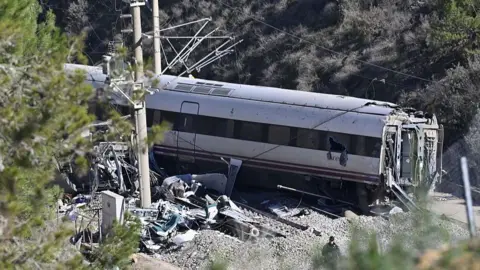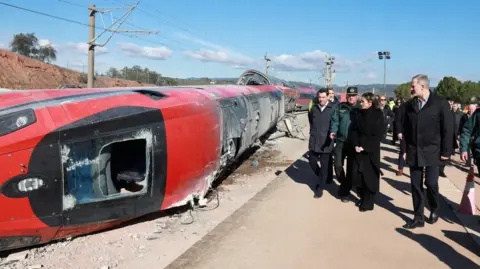
Sunday's high-speed train crash in southern Spain, the worst in over a decade, has resulted in the tragic loss of at least 42 lives. Amid the grief, many are left questioning how such a catastrophic failure could occur in one of Europe's most admired rail systems.
The CIAF rail investigatory commission has commenced its inquiries to understand why a train traveling north from Málaga derailed on a straight section of the route, subsequently colliding with an oncoming train, which also derailed. The Spanish government described the incident as extremely strange.
As recovery efforts continue, three bodies were recovered from the wreckage on Tuesday afternoon, while a 42nd victim was discovered at the crash site near Adamuz. The shock reverberating through this quiet town has been intensified by the bafflement over how a rail route that had functioned efficiently for years could suddenly fail.
Spain's high-speed rail, or AVE, network was inaugurated in 1992 as a symbol of modernization, built with EU funds to provide fast, efficient, and safe transportation. Notably, a prior derailment near Santiago de Compostela in 2013 resulted in 80 fatalities; however, it did not involve the AVE network.
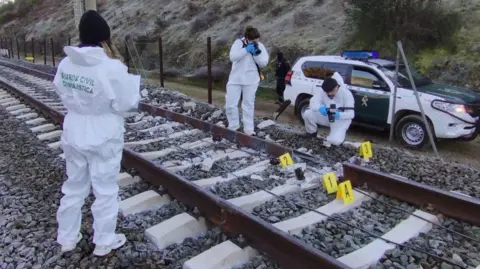
This recent accident occurred on the oldest AVE route connecting Madrid to Andalusia. Several officials, including Renfe's president Álvaro Fernández Heredia, suggested that human error almost certainly was not responsible, attributing normal speeds to both trains. Interior Minister Fernando Grande-Marlaska stressed that sabotage was not suspected.
With eyes set on the derailed train owned by Italian firm Iryo, investigators plan to meticulously examine carriage number six, which was the first to derail. Transport Minister Óscar Puente confirmed that this examination might provide valuable insights.
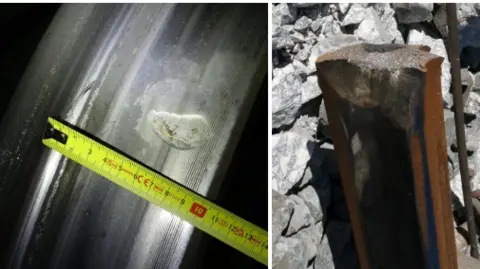
Investigators are also scrutinizing the section of track where the derailment occurred and will analyze parts of it in a laboratory. The discovery of a broken track at the crash site has raised speculation about its role in the disaster, although government officials warn this damage may have resulted from the force of the collision.
Concerns about the network's condition have been highlighted, with rail infrastructure administrator Adif pointing out eight technical issues on the line near the accident location. Most of these problems were related to signaling, with one issue previously discussed in the Senate last summer.
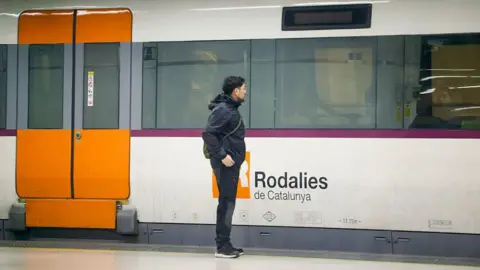
Post-collision, Adif reduced the speed limit for the AVE along a 150-km stretch between Madrid and Barcelona due to infrastructure concerns. Complaints have recently surfaced from passengers about uncomfortable vibrations during travel on the AVE network, with some calling for urgency in upgrading infrastructure to ensure safety.
Questioning the network's condition has become a focal point, as the government contends the track where the accident happened was renovated only last year for €49 million, as part of a larger €700 million investment plan. Prime Minister Pedro Sánchez has promised full transparency in the investigation outcomes, emphasizing the significance it holds for the future of Spain's celebrated rail system.
}