Since the high-speed line was built, 30-something years ago, we never had any problems, it worked perfectly and was fantastic, says Alberto Montavez Montes, a shop-owner opposite Córdoba city hall, where the Spanish and Andalusian flags have been hanging at half-mast.
Now, though things feel different: It's not that there's psychosis, but it does make you just a bit reluctant to get on a train, without a doubt. In just a few tragic days since two high-speed trains collided in this southern region of Spain, with the loss of 45 lives, it has felt that Spain's much-vaunted rail system has been thrown into a sudden, deep crisis.
Second only to China in scale, Spain has 3,900 km (2,400 miles) of high-speed (AVE) rail, and until now, its national network has been admired for its efficiency and safety. In 2009, then-US president Barack Obama singled out Spain for praise when he outlined a vision for the creation of a high-speed rail network across America. The line connecting Madrid and Seville is so successful that more people travel between those cities by rail than by car and airplane combined, he said. At the time, a Spanish-led consortium had just begun work on a high-speed link across the Saudi Arabian desert, confirming the country's status as a rail superpower. That reputation has been humbled this week.
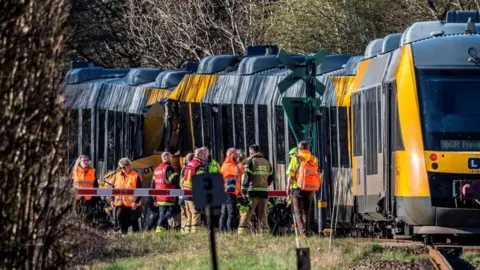
Last Sunday, the back three carriages of a train run by private Italian operator Iryo derailed at high speed, along a straight stretch of track, into the path of an oncoming train run by national rail operator Renfe which bore the brunt of the crash. Two days later, a trainee driver was killed when a wall collapsed on to a suburban rail line near Barcelona in the north-east after heavy rainfall, derailing a train.
In addition, several high-speed lines have had their speed limits temporarily reduced, due to safety concerns, leading to delays and cancellations affecting the rail system, which have been on the rise. Many citizens, such as Olga Márquez, have expressed concerns over the safety and condition of the tracks their loved ones travel on.
Amidst this turmoil, the Spanish government, including the Ministry of Transport, has maintained that the issues are not due to a lack of maintenance or investment, but public sentiment is shifting. Political factions have engaged in heated debate over the implications for Spain's rail system moving forward, with the prime minister acknowledging the tragedy's impact but also emphasizing the rail network remains a point of national pride.
As investigations continue, the rail system's future lies in a delicate balance between safety, public confidence, and the ongoing scrutiny of its operational integrity.
}