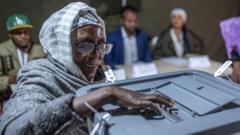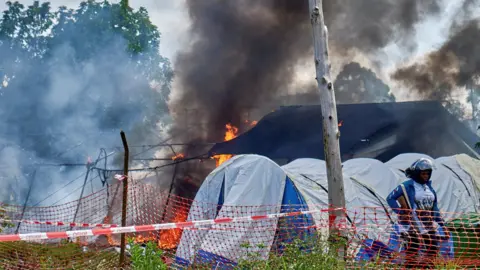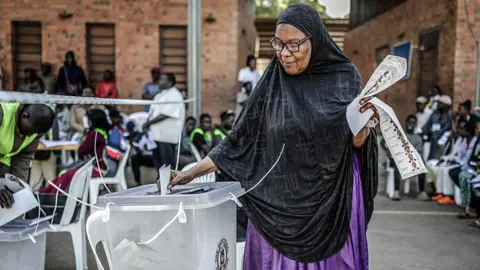
Polls have opened in Uganda's presidential and parliamentary elections, though voting has been disrupted by logistical delays in parts of the country amid an internet shutdown.
In the morning, the BBC observed growing frustration among voters queuing at some polling stations in the capital, Kampala, where voting had yet to start. Election officials are yet to comment.
The delays have been blamed on failures of biometric identification kits, which some have linked to the network outage, as well as a lack of equipment in some places.
In the presidential race, Yoweri Museveni, 81, in power since 1986, is seeking a seventh successive victory as he faces a challenge from a charismatic pop star.
Where voting has been taking place, there are reports that the biometric machines used to verify voters' identities are still malfunctioning in some areas.
Some biometric machines are not working. I don't know if it's the internet, a ruling party official told AFP news agency.
Delays have also been caused by polling materials and equipment failing to arrive at some stations on time.
We arrived early at the polling station, but the voting equipment has not yet arrived, a voter in Kampala told state-run UBC TV.
The problems appear to be affecting areas that are seen as pro-government as well as areas that are seen as pro-opposition.
The presidential poll is essentially a two-horse race between Museveni and singer-turned-politician Bobi Wine, but given the president has won the six previous elections, analysts say he is likely to further extend his time in power.
Wine, 43, has promised to tackle corruption and impose sweeping reforms, while Museveni argues he is the sole guarantor of stability and progress in the country.
The campaign period was marred by the disruption of opposition activities - security forces have been accused of assaulting and detaining Wine's supporters.
Internet access had been suspended ahead of voting day, with Uganda's Communications Commission saying a blackout was necessary to prevent misinformation, fraud, and the incitement of violence - a move condemned by the UN human rights office as deeply worrying.
The NUP has rejected this explanation, accusing the regulator of trying to stop the opposition from mobilizing and sharing evidence of election fraud.
During the campaign period, opposition supporters have faced escalating harassment, including arrest on politically motivated charges, according to both the United Nations and Amnesty International.
Internet access also remains a critical issue as voting unfolds, with many citizens feeling disenfranchised amidst fears of retaliation in case of negative outcomes.
Some Kampala residents have traveled to rural areas, saying they believe it is safer there during the election period.
Polls are due to close at 16:00 local time on Thursday. The result of the presidential vote will be announced on Saturday by the electoral commission.