In brief
The 2026 Senate debates revealed that many Republican candidates are distancing themselves from President Donald Trump, while personal attacks on opponents became a notable strategy. In Michigan, Abdul El‑Sayed faced a sharp challenge from Mike Rogers, and Georgia’s Jon Ossoff used intense rhetoric against Mike Collins. Meanwhile, 21 of 35 Senate races lack any major debate, putting candidates like Texas Republican Ken Paxton at a potential disadvantage by refusing public engagement.
What we learned from heated US midterm Senate debates
Candidates running for the US Senate in next month’s midterm elections have taken to the debate stage over the past few weeks – with some heated exchanges and stinging personal attacks.
As 3 November approaches and parties fight for control of Congress, the debates revealed three key themes that could shape voter perceptions and campaign strategies.
1. Not all Republicans are standing behind Trump
Some GOP contenders are distancing themselves from President Donald Trump, a strategy that has become decisive since 2016. A Reuters analysis found that two‑thirds of candidates in close House and Senate races this cycle have diverged from Trump in some way.
Senate veteran Susan Collins of Maine, who has fought Trump repeatedly, openly said in a debate that she opposed the president 137 times and highlighted her 91% alignment with President Biden’s agenda.
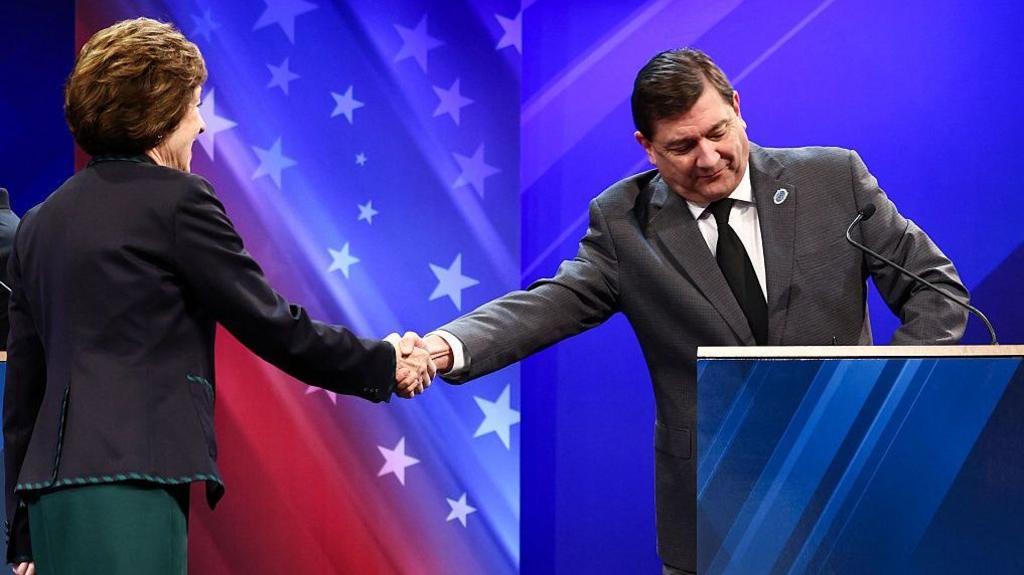
Her main rival, former Maine Senate president Troy Jackson, is tense rivals, with polls showing a narrow margin and the debate swapping tense handshakes and snappy retorts.
2. Personal attacks are a common theme
Debates across the country became arenas for targeted personal attacks. In Michigan, Republican Mike Rogers questioned Democrat Abdul El‑Sayed on whether any family members were on a “watchlist”, prompting El‑Sayed to retort with a scathing counter‑attack. The exchange escalated into name‑calling and accusations of bigotry.
In Georgia, Democratic Senator Jon Ossoff and Republican Mike Collins bickered over campaign donations and security costs, with Ossoff calling Collins a “bigot” who had hired “half the Third Reich”. The scuffle highlighted how personal rhetoric can dominate the public record.
3. Some candidates are skipping debates entirely
Out of 35 Senate seats this November, 21 have no scheduled debates among at least the two main contenders, according to an ABC News analysis. The Texas race between incumbent Ken Paxton and Democrat James Talarico is a high‑profile example.
Paxton has declined all debate invitations, while Talarico accepted four. The lack of a debate can be risky for a candidate – the opportunity to refute opponents’ claims and present their own record is limited.
National observers note that such absences can leave voters with a one‑sided narrative, potentially tilting undecided districts.
Follow the twists and turns of this election cycle: US Politics Unspun Newsletter.