
In brief
In response to an unprecedented violation of Polish airspace by Russian drones, NATO members are enhancing military presence in Eastern Europe. Poland has requested a UN Security Council session following the incident. Various NATO allies are contributing troops and air defense resources to counter the potential threat, emphasizing a united front against Russian aggression.
Several NATO members are sending troops, artillery, and air defence systems to secure its eastern flank after what Poland called an unprecedented Russian drone incursion into its airspace.
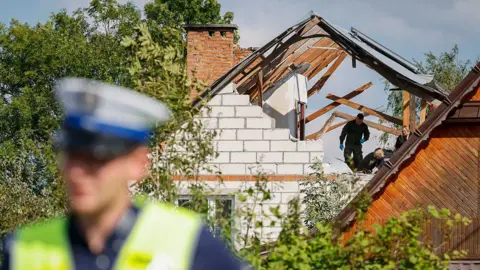
In the early hours of Wednesday, three Russian drones were shot down after crossing into Polish airspace. Other drones crashed to the ground and were later found across eastern Poland.
Poland has requested a UN Security Council session about the incident, which will take place on Friday at 19:00 GMT.
In response to the drone incursion, the Netherlands and the Czech Republic said they would send defences to Poland, while Lithuania would receive a German brigade and greater warning of Russian attacks on Ukraine that could cross over.
Germany also stated it would intensify its engagement along NATO's eastern border and extend and expand air policing over Poland.
Later, France's Emmanuel Macron announced that the country would send three Rafale fighter jets to help protect Poland's airspace, affirming that We will not yield to Russia's growing intimidation.
Addressing parliament on Thursday, Polish Defence Minister Wladyslaw Kosiniak-Kamysz listed the offers of support from Poland's partners, noting that the Dutch would deploy air defence systems, artillery, and 300 troops, while the Czech Republic would send helicopters and 100 soldiers.
He also mentioned that French and British forces could deploy aircraft to secure NATO's eastern flank.
Known for its history of facing threats, Poland's Defence Minister remarked, Today, we have concrete declarations of support.
Although Russian drones and missiles have trespassed into some NATO member countries in the past, this incident marks the most serious confrontation since Moscow's full-scale invasion of Ukraine began in February 2022.
The Kremlin declined to comment on claims that Russia deliberately instigated tensions in Poland, even as many Polish and European leaders suspect the incursion was a calculated move.
Poland's President Karol Nawrocki labelled the situation as a Russian provocation aimed at testing NATO's response capabilities, reflecting sentiments shared by leaders in Germany and France.
Notably, NATO's top military commander acknowledged that it remains uncertain whether the act was deliberate, highlighting ongoing investigations into the exact circumstances surrounding the incident.
In light of the drone incursions, Warsaw is implementing restrictions on drones and smaller air traffic along its eastern borders, anticipating heightened military activities such as the upcoming Zapad 2025 exercises conducted by Belarus and Russia.
Ukraine's President Volodymyr Zelensky offered assistance to Western military representatives on aerial defense tactics, pushing for a collaborative air defense system as a shield against further Russian aggressions.
The NATO response showcases a strong commitment to safeguarding its eastern borders and maintaining regional stability amidst escalating tensions.
