In brief
In Brazil’s 2026 presidential election, Luiz Inácio Lula da Silva won a historic fourth term by defeating Flavio Bolsonaro in a runoff. The result, announced by the Superior Electoral Court, was celebrated both domestically and internationally, with Brazil’s shift toward center‑left governance highlighted by analysts. Global leaders, including U.S., French, and Chinese presidents, and Brazilian politicians congratulated Lula amid celebrations in São Paulo and Brasília.
On October 26, 2026, the Superior Electoral Court declared Luiz Inácio Lula da Silva the winner of Brazil’s presidential election after a runoff against Flavio Bolsonaro, handing the former president a historic fourth term in the nation’s highest office.
In the runoff, cited by the court as an example of Brazil’s robust democratic process, Lula secured a decisive majority of the vote, which ended a tense political competition that had seen Bolsonaro’s campaign contest the result. Lula’s win was promptly logged by the court’s official bulletin, marking the country’s first return to a stable, center‑left government after years of political turbulence.
Internationally, Lula’s triumph was met with congratulations from several heads of state. President Joe Biden, President Emmanuel Macron, and President Xi Jinping each sent messages affirming support for Brazil’s democratic transition and welcoming Lula to a fourth term. The messages highlighted a shared interest in global climate negotiations and economic cooperation.
Within Brazil, the announcement also drew praise from local politicians. Notably, Marcelo Crivella’s son, Marcelo Bolsonaro, who had campaigned for Lula during the election, extended a public congratulations. His public statement underscored a cross‑party acknowledgment of the election’s legitimacy in a context of intense partisan tension.
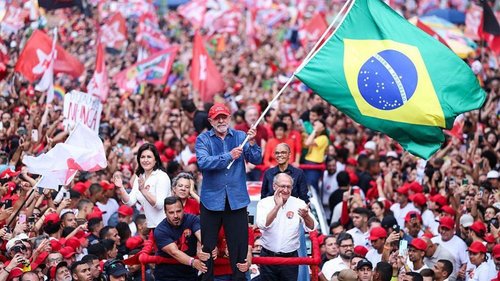
Fireworks erupted in São Paulo’s main square, while crowds assembled in Brasília’s Praça da República to celebrate the outcome. The celebrations were an expression of confidence in the electoral system and in Lula’s prospective agenda, which has promised continued focus on environmental protection, economic growth, and social inclusion.
Despite the nationwide celebration, Bolsonaro’s campaign maintained that the vote had been fraudulent. However, no evidence was presented to the court, and the election commission upheld the tally. Lula’s campaign, in turn, leveraged the victory to highlight Brazil’s achievements in environmental policy, economic expansion, and social inclusion during his previous administrations. They argued that these successes justified a return to a center‑left platform that could further strengthen Brazil’s standing in global climate negotiations and broaden social welfare programs.
Analysts interpret Lula’s fourth term as a substantial shift away from the years of political instability that plagued the country. They point to the future governmental focus on combating corruption, enhancing public accountability, and strengthening Brazil’s role in international climate conferences, which are expected to influence environmental governance in the region.
The Superior Electoral Court’s confirmation of the results reinforces the credibility of Brazil’s democratic institutions, giving legitimacy to the transition. Meanwhile, the electoral process itself, with its transparent monitoring and public notification, exemplifies how voting systems can uphold public trust in governance.
The people most directly affected by Lula’s platform are Brazil’s vast, diverse electorate—especially those in rural communities, urban poor, and other historically marginalized groups. Lula’s proposed expansion of social welfare programs seeks to extend support to these populations, promising improved access to services and inclusive economic opportunities.
In sum, Lula’s 2026 victory underscores both the strengthening of Brazil’s institutions and the broader civic stakes of a democratic process that engages nationwide public participation, enforces legal accountability, and signals a renewed commitment to inclusive governance.