
In brief
Musa al-Sadr, a revered figure in Shia Islam, disappeared in 1978 under mysterious circumstances. A recent investigation has revived interest in his case, with a computer scientist applying facial recognition technology to a photograph of a body found in a Libyan mortuary, believed to potentially be Sadr’s. Despite conflicting accounts and ongoing conspiracy theories, the investigation seeks to unveil the truth around his fate and the implications for the Middle East.
Warning: Contains images some may find upsetting
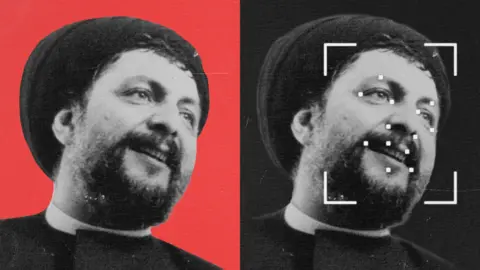
A computer scientist at a university in northern England is studying an image of a decomposed corpse in an effort to solve a nearly 50-year-old mystery: the disappearance of Musa al-Sadr, a charismatic Shia cleric who vanished in Libya in 1978.
"This is what he looks like now?" Bradford University's Prof Hassan Ugail questions skeptically as he prepares to run the digitized photo through a specialized algorithm. The original image was taken in 2011 by a journalist who reportedly saw the body in a secret mortuary in Tripoli, who believed it might belong to the missing cleric.
Sadr's estrangement has given birth to numerous conspiracy theories, with some insisting he was killed while others maintain he is alive. For many of his devoted followers, the intrigue surrounding his disappearance rivals that of the assassination of US President John F. Kennedy. This transformation into a revered figure resonates with the fate of the 'hidden' 12th Imam in Shia Islam, amplifying the emotional and spiritual significance of Sadr's disappearance.
On August 25, 1978, Sadr visited Libya to meet Colonel Muammar Gaddafi, seeking his support for Lebanon's Shia community amid a nascent civil war. After his disappearance during that trip, Gaddafi's security claimed Sadr had left for Italy, a claim that was later disproven.
The investigation returned to the forefront after journalist Kassem Hamadé uncovered a mortuary housing 17 bodies, one of which closely resembled Sadr, presenting evidence that the body had been executed. Further facial recognition analysis from Bradford University yielded a score suggesting a strong likelihood that the body was indeed Sadr’s.
Despite this analysis, skepticism remains prevalent within Sadr's community, particularly among prominent figures in Lebanon who believe in his continued survival. Their efforts to validate or contest these claims remain ongoing amidst the fragile political climate that continues to haunt Libya and Lebanon.
Research findings reveal that Sadr's diplomatic and social ambitions could have radically altered the trajectory of Middle Eastern politics, making the determination of his fate not only critical for his followers but also relevant for understanding contemporary regional dynamics.
