In brief
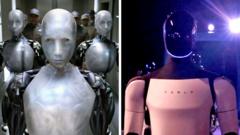
At a recent Tesla event, Elon Musk unveiled the Cybercab and Optimus robots, drawing ire from 'I, Robot' director Alex Proyas for allegedly copying the film's designs. Proyas, known for the 2004 sci-fi film, claimed on social media that Musk's creations resembled those in his movie, sparking a debate about originality in tech design. He sarcastically requested the return of his designs, stirring responses from the film's production designer Patrick Tatopoulos and others online. This highlights ongoing discussions about the influence of sci-fi on tech developments.
Elon Musk has come under fire from Alex Proyas, the director of the 2004 sci-fi film 'I, Robot,' for allegedly mimicking the film's designs in Tesla's latest innovations. During a Tesla event, Musk showcased the futuristic Cybercab and Optimus robots, prompting Proyas to take to social media, requesting his "designs back." The filmmaker criticized Musk's design team, positing they were inspired by his movie. His post viewed millions of times, sparked a conversation about originality, with some online noting sci-fi's longstanding influence on tech. Patrick Tatopoulos, the film's production designer, even shared a side-by-side comparison of the designs on Instagram, adding a touch of humor to the situation. However, the legitimacy of these claims faces skepticism, as some argue that Proyas's own designs were influenced by earlier works like Fritz Lang's 'Metropolis.' This incident underscores a broader conversation on how sci-fi shapes technological advancements, with Musk previously citing inspiration from other sci-fi classics like 'The Hitchhiker's Guide to the Galaxy.' Meanwhile, broader debates on AI's impact continue, highlighted by other accusations in the tech world, such as OpenAI's controversial voice assistant. These discussions reflect the complex intersections between creativity, technology, and the ethical boundaries of innovation.