
In brief
Russia and Belarus have begun conducting military drills titled 'Zapad 2025', which involve simulations of airstrikes and sabotage aimed at repelling attacks. These activities have heightened concerns among neighboring countries, particularly Ukraine, Poland, Latvia, and Lithuania, due to the historical context of such drills often leading to military aggression. The situation is further complicated by recent drone incursions reported by Poland, intensifying scrutiny of the exercises. Belarus' Defense Minister downplayed the scale of the drills, but estimates suggest troop involvement could be significant. Amidst ongoing war in Ukraine and a backdrop of strained international relations, NATO members remain watchful.
TALLINN, Estonia (AP) — The last time Russia and Belarus held major joint military drills in 2022, Moscow sent its troops into Ukraine just days later. Now, the two allied nations are conducting war games again, amplifying regional tensions.
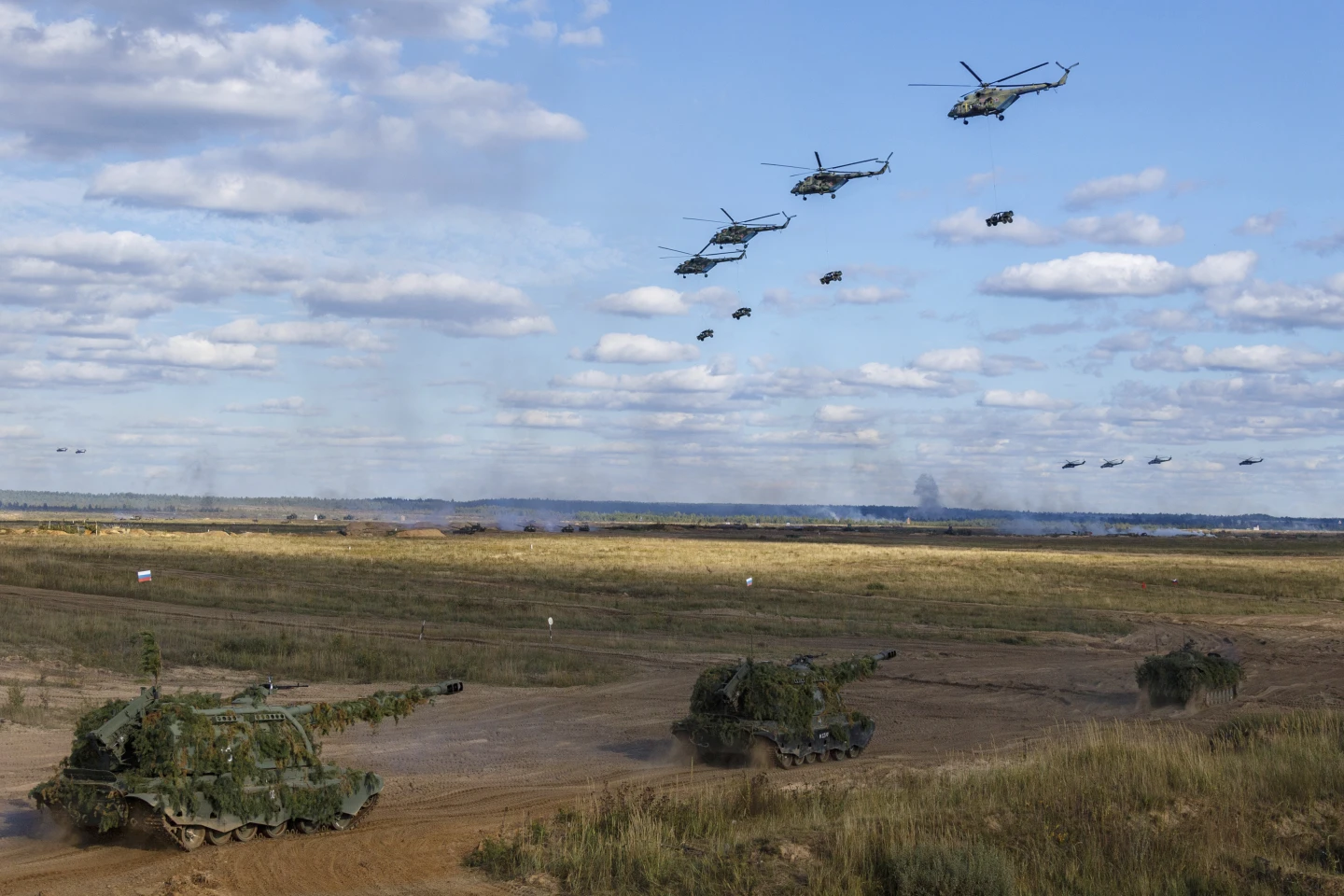
The exercises, dubbed “Zapad 2025” or “West 2025”, are taking place in Belarus starting Friday until September 16. Troops from both countries will simulate attacks and counteractions, including airstrikes and sabotage, according to official reports.
The aim is to highlight the close ties between Moscow and Minsk, as well as to showcase Russian military capabilities amidst its ongoing conflict in Ukraine.
The war games have sparked concerns in Kyiv and among its Western allies, including Latvia, Lithuania, and Poland, which share borders with Belarus. Russian President Vladimir Putin previously sent troops into Ukraine on February 24, 2022, with many crossing from Belarus.
In response to the exercises, the Ukrainian Foreign Ministry asserted that this year’s maneuvers hinder peaceful resolutions in the region and could pose immediate threats to Poland, the Baltic states, and Europe as a whole.
As tensions escalated, Poland reported that several Russian drones, some originating from Belarus, had entered its territory. These were intercepted with assistance from NATO allies. While the Russian military denied targeting Poland, many European leaders voiced fears of an intentional violation.
Belarusian Military Preparations
Initially, officials indicated that approximately 13,000 troops would participate in the exercises. However, this figure was later reduced, with the main drills now expected to occur deep within Belarus rather than on the western border.
Belarusian Defense Minister Viktor Khrenin stated that substantial activities would be centered around Barysaw, with smaller units conducting exercises near border areas with Poland and Lithuania.
Despite Belarus’ attempts to underline monitoring invitations to OSCE member states, the response from NATO nations remains cautious, with Poland conducting its own exercises in parallel.
Concerns Over Military Scale
The scale of involvement remains debated. While Belarusian authorities claim lower numbers, estimates from Western analysts suggest possible troop interactions could range from 30,000 to as high as 150,000. In 2021, the previous iteration of 'Zapad' involved about 200,000 troops, raising red flags for the international community.
During the ongoing drills, troops will practice procedures related to the deployment of Russian nuclear weapons promised to Belarus, a critical factor as both countries navigate their military strategies amid substantial international scrutiny.
NATO members are on high alert for any potential provocations stemming from these military exercises, particularly with ongoing threats around the Suwalki Gap, a strategic land segment of interest to both NATO and Russia.
Amidst these developments, Belarusian President Alexander Lukashenko has hinted at striving for de-escalation and improving relations with the West, signaling a notable shift given the long-term crux of his administration's alliances.

